
- BBB A+
- Owens Corning Preferred
- EPA Lead-Safe
- EIFS Certified
- Licensed & Bonded
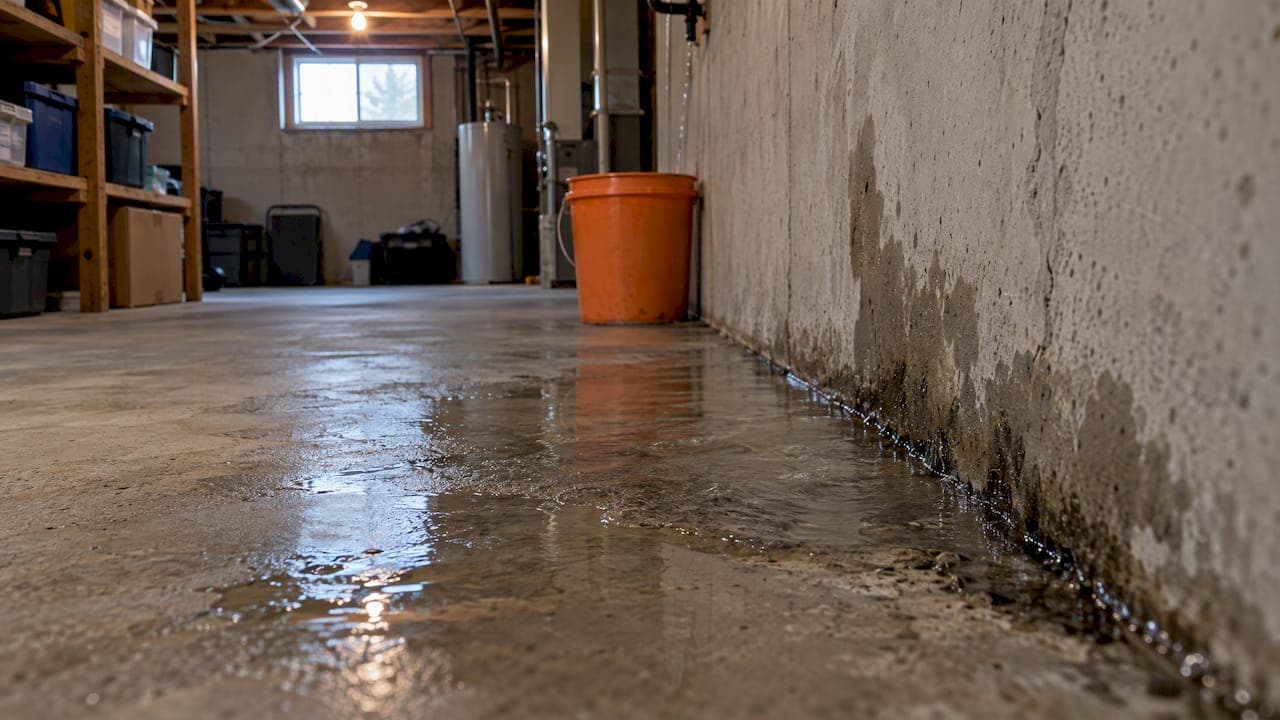
Wet Basement After Rain: Causes, Fixes and What to Do First

A wet basement after rain almost always means water is collecting against your foundation faster than the ground and your drainage can carry it away. The leak you see on the floor is the symptom. The cause is usually outside: roof runoff, soil that slopes toward the house, or saturated clay pressing on the walls. Below, we walk through how to stay safe tonight, how to find the real source, which fixes come first, and when interior drain tile and a sump system are the right answer for Baltimore County homes.
TL;DR
- Stay out of a basement with standing water until the power is off and you know it is safe, then photograph everything before you clean up.
- Watch where water goes during the next storm. Downspouts dumping at the foundation and soil sloping toward the house cause most wet basements.
- Fix the outside first (gutters, downspouts, grading). Patching walls from the inside without addressing the water outside traps it in the foundation.
- If water keeps coming in after the outside is sorted, interior drain tile with a sump pump is the usual long-term fix. Exterior excavation is the other option, and it costs far more disruption.
- Most homeowners policies exclude groundwater seepage, so document and ask your insurer before signing any cleanup or repair agreement.
Table of Contents
- Why basements get wet after a heavy rain
- What to do tonight if water is in the basement
- Find the source: watch the rain, not the wall
- Fix the outside first
- When the outside fix is not enough: interior or exterior waterproofing
- Our perspective: a wet basement is usually a whole-house question
- Will insurance pay for a wet basement?
- Get a second set of eyes on your basement
- A simple prevention checklist for Maryland homeowners
- FAQ
- Sources
Why basements get wet after a heavy rain
Rain is the most common source of basement water. The National Association of Home Builders notes that hundreds or even thousands of gallons can fall on a roof in a single storm. That water has to go somewhere. If it lands beside the foundation, the soil soaks up and the water looks for any opening it can find.
The volume is bigger than most people expect. University of Maryland Extension estimates that a 1,500 square-foot roof sheds about 1,870 gallons from just 2 inches of rain. Multiply that by the number of downspouts that empty right at the wall and you can see why a house that stays dry in a drizzle floods in a thunderstorm.
The usual causes, roughly from most to least common:
- Roof runoff discharging at the foundation. Clogged gutters overflow over the edge, and short downspouts drop water beside the footing.
- Grading that slopes toward the house. Soil settles over the years, especially around the backfilled zone next to the foundation. The result is a shallow bowl that holds water against the wall.
- Hydrostatic pressure. When the ground is saturated, water pushes against the foundation. Maryland County residential guidance describes this pressure as the force behind bowing walls and seepage through walls and floors. UMD Extension cites up to 0.43 PSI for every foot of water depth.
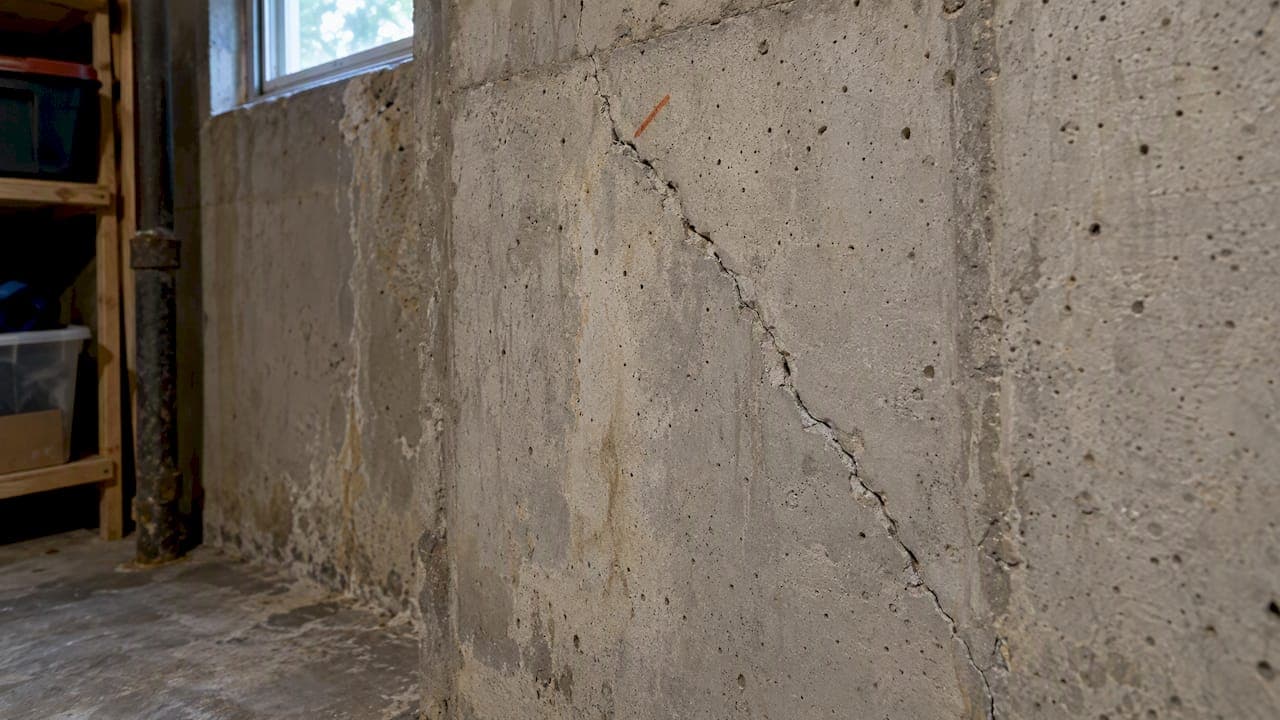
- Cracks, tie rod holes and the cove joint. The seam where the floor meets the wall is the weak point in many poured and block foundations. Water finds it first.
- Window wells and basement stairwells without proper drainage or covers.
- A failed or undersized sump pump, or one with no battery backup when the power drops in the same storm.
None of this means your house is defective. The Missouri Department of Natural Resources makes the same point: a hidden spring under the house is a far less likely explanation than ordinary surface water and soil conditions. Central Maryland adds its own twist, with heavy clay soils that drain slowly and hold water against foundations after long rains.
What to do tonight if water is in the basement
Safety comes before cleanup.
- Do not walk into standing water. MMSD’s guidance is blunt: electricity and water are a dangerous mix. If the water is high enough to reach outlets, appliances or the panel, stay out and call a licensed electrician or your utility.
- Do not pump a deep basement out fast. NDSU Extension warns that with more than 6 inches of standing water, quick pumping can be dangerous, because the water inside may be bracing the walls against saturated soil outside. It recommends waiting until the water outside recedes, then removing about one-third of the water per day.
- Document before you discard. FEMA’s guidance says to photograph and video every affected room, including closets and cabinets, and to record serial numbers on appliances like your washer, dryer and water heater. Items that pose a health risk, such as saturated food, clothing and cushions, can be thrown away once documented.
- Start drying and limit mold. The same FEMA page notes that failing to take reasonable steps to prevent mold can lead to denial of mold coverage.
- Hold off on signing anything. FEMA advises talking with your insurance company before you sign any cleanup, remediation or maintenance agreement.
If the water came from a burst pipe, an appliance or a storm that also damaged your roof, you are dealing with a water damage restoration job, not just a drainage problem. Our water damage restoration team handles the drying and repair side so the damage does not spread while you sort out the cause.
Find the source: watch the rain, not the wall
The best time to diagnose a wet basement is during the storm. Municipal water management experts at MMSD recommend observing where water pools outside and where downspouts discharge, because that usually points to the root cause: surface grading or clogged gutters.
Next rain, with a rain jacket on, walk the property and check:
- Gutters. Is water spilling over the front edge or pouring behind the gutter? Overflow at the corners and valleys is a classic sign of debris or undersized gutters.
- Downspouts. Where does the water land? A splash block at the wall does almost nothing. UMD Extension recommends releasing downspout water at least 10 feet from the foundation on homes with basements.
- Grading. Does water run toward the house or pond along the wall? Any low spot within a few feet of the foundation is a suspect.
- Roof edges and flashing. Water that runs behind the fascia or at a wall-to-roof joint can end up on the foundation and sometimes inside the walls. Our guide to stopping a roof leak at the source explains how to trace it.
- Window wells and patios. Are they sloped toward the house? Are the window wells draining?
Then look inside. Where does the water show up? Water at the wall-floor joint all along one side points to hydrostatic pressure. A single wet spot under a window suggests a well or grading problem. A stain or drip high on the wall under a roofline often traces back to the roof or gutters, not the ground.
Rule out plumbing and sewer problems
Not every wet basement is rain. NAHB’s guide suggests shutting off all water use in the house and watching the water meter. If it keeps moving, you likely have a hidden pipe leak. And if a backup happens during dry weather, the likely cause is a blocked sewer lateral or plumbing, not foundation seepage. Neither is fixed by waterproofing, so it pays to check before you spend money.
Fix the outside first
The NAHB paper makes a point we agree with from experience: the leak is the symptom, and the real problem is failing to move water away from the structure. Internal solutions like sump pumps are secondary to getting the ground surface to shed water. MMSD adds that surface drainage should be corrected before any cosmetic patching inside, since sealing the inside only traps water within the walls and can lead to worse long-term damage.
For most Baltimore County homes, the sensible order is:
- Clean and repair gutters and make sure they are pitched toward the downspouts. If you have recurring overflow, the gutters may need resizing or more downspouts.
- Extend downspouts so they discharge well away from the foundation, ideally 10 feet or more where the layout allows, or into a buried line that daylights away from the house.
- Re-grade so soil falls away from the wall. A gentle, consistent slope for the first several feet is the goal. Do not bury siding or block weep holes.
- Fix the roof edge and flashing if water is running behind gutters or down the walls.
- Seal visible cracks only after the water source is controlled. Treat sealing as a finishing step, not the cure.
Before any digging for a French drain or regrading project, Maryland law requires you to call Miss Utility at 811 at least two working days ahead. That service will not mark private lines such as invisible dog fences, pool plumbing or private electrical runs, so confirm those yourself. A licensed contractor will usually handle the call and the private-line check as part of the job.
When the outside fix is not enough: interior or exterior waterproofing
Sometimes you do everything right outside and the cove joint still seeps in a nor’easter. Saturated clay, a high water table, a long block wall or a house built below the surrounding grade can overwhelm surface fixes. That is when homeowners start comparing interior and exterior waterproofing.
| Interior drain tile and sump | Exterior excavation and membrane | |
|---|---|---|
| How it works | Collects water at the footing or cove joint inside the basement and sends it to a sump pump and out of the house | Digs down to the footing, seals the wall, and installs drainage outside so water never reaches the wall |
| Disruption | Cuts a trench in the basement floor along the walls, then re-pours concrete | Excavates along the foundation, affecting landscaping, patios, steps and sometimes utilities |
| Access | Works even if decks, patios or neighboring structures block the outside | Needs clear access around the house |
| Typical fit | Water entering at the floor-wall joint, finished or unfinished basements, tight lots | Foundation wall defects, limited cases where the wall itself needs repair |
| Depends on | A working sump pump, a discharge line and ideally a battery backup | Quality of the membrane and drainage, and the backfill |
| Fixes surface causes? | No. Gutters and grading still matter | No. Gutters and grading still matter |
In the Baltimore area, interior drain tile with a sump system is the most common long-term approach because it handles water at the point where it actually enters, avoids tearing up the yard, and works on tight rowhouse and suburban lots. Exterior work makes sense when the wall itself needs repair, for example from structural issues like bowing or cracking, or when you are already excavating for another reason. A good contractor will tell you which one your house needs after looking at it, not before.
What a sound interior system includes
- Drain tile or channel along the perimeter at the footing, set in clean stone and sloped to the sump
- A sump basin with a properly sized pump, a check valve and a discharge line that carries water well away from the foundation
- A battery backup, because storms often take out power when you need the pump most
- Restored concrete over the trench, finished level so the floor is usable again
That last item is why it helps to hire a general contractor who also does concrete. The drain tile trench ends with new slab work, and splitting the job between a waterproofing specialist and a separate concrete crew is how finish quality gets lost.
Our perspective: a wet basement is usually a whole-house question
We are a roofing and home services contractor, and we see wet basements from an unusual angle. Many of the calls that start as a leak in the basement end at the roof edge, the gutter line or a downspout that was never extended. Roofing is our core trade, so we always walk the whole water path: shingles, flashing, gutters, downspouts, grading, then foundation.

That is why we resist the quick answer. A basement that gets wet only in the heaviest storms often needs gutters and grading, not a floor trench. A basement that seeps at the cove joint every time the ground is saturated needs interior drainage and a sump. Sometimes it needs both. We would rather show you the evidence, photos of the overflow, the pooling, the wet joint, and let you decide, than sell a system you do not need.
When you do need one, we can carry the whole job: drain tile, sump, concrete repair, and any water damage restoration or structural work that surfaced along the way, under one licensed contractor instead of three.
— Charles Hinkel
Will insurance pay for a wet basement?
This is where homeowners get surprised, so check before you assume.
- Seepage is usually excluded. The Maryland Insurance Administration says that if water seeps into your basement from the ground, you are generally not covered for the resulting damage, since seepage is excluded under most homeowners policies. It also notes that standard policies often exclude flood and sump pump failure, so ask about endorsements.
- Flood insurance has limits. Under the NFIP, per the same Maryland guide, there is a 30-day waiting period in most cases, with building coverage capped at $250,000 and contents at $100,000 for single-family homes.
- Finished basements are a gap. FEMA explains that NFIP building coverage in a basement is limited to items like furnaces, sump pumps, water heaters and unpainted drywall. Finished walls, flooring and carpet are generally excluded.
- The stakes are high. FloodSmart reports that just one inch of water in a typical home can cause up to $25,000 in damage.
If the water came through a storm-damaged roof, a failed pipe or another covered event, you may have a legitimate claim. The policy language decides, and your insurer or agent is the one to confirm it. Our insurance restoration team helps document damage and works with the claim process when a covered loss is involved. For storm-related roof damage that let water in, see our storm damage and insurance restoration page.
Get a second set of eyes on your basement
If your basement keeps getting wet and you are not sure whether you need gutters, grading, a drain system or a roof repair, we will look at the whole water path with you. Magnum Home Services serves Towson, Baltimore City, Baltimore County and nearby Harford and Anne Arundel communities. Start with our basement waterproofing page to see what we do, or reach us through our home page to schedule an inspection. We lay out what we find, photos included, and itemize any estimate so you can compare it fairly.
A simple prevention checklist for Maryland homeowners
Twice a year, spring and late fall, do the following:
- Clear gutters and check that they hold water to the downspouts, not behind them
- Confirm downspout extensions are in place and pointing away from the house
- Walk the foundation and look for low spots, settled soil and mulch piled against siding
- Test the sump pump by pouring a bucket of water into the basin and confirming it starts, discharges and shuts off
- Check the battery backup
- Look at the roof edges from the ground for sagging gutters, missing shingles or stained fascia. Our guide to soffit and fascia repair shows what to look for
- Keep window wells clear of leaves and debris
After any major storm, a quick walk-around finds small problems before the next one.
FAQ
Why does my basement only leak after heavy rain?
Because the soil around the foundation has to be saturated before water is pushed through the wall or floor joint. Light rain gets absorbed. Heavy or prolonged rain overwhelms the gutters, grading and soil, and the pressure builds against the foundation. That pattern usually points to a surface drainage problem, a high water table or both.
Is a wet basement after a storm a sign of foundation damage?
Not necessarily. Most wet basements come from drainage issues rather than structural failure. But bowing walls, widening or horizontal cracks, or doors and windows that suddenly stick can signal pressure damage, and those need a structural evaluation rather than a sealant.
How long does it take to dry out a wet basement?
It depends on how much water entered, how long it sat and how well you can ventilate. Minor dampness can dry in a few days with fans and a dehumidifier. Soaked drywall, insulation and carpet should be removed and documented rather than dried in place, and a larger flood can take a week or more. Start as soon as it is safe, since the mold clock starts quickly.
Should I choose interior or exterior waterproofing?
Fix gutters, downspouts and grading first, since they are the cheapest and often solve the problem. If water still enters, interior drain tile with a sump pump is usually the practical choice for Baltimore-area homes because it catches water at the joint and leaves the yard intact. Exterior excavation fits cases where the foundation wall itself needs repair. An in-person inspection decides it.
Sources
- NDSU Agriculture: How to Deal With a Leaking or Flooded Basement
- MMSD: Why is There Water in My Basement?
- NAHB: Ultimate Guide to Stop Basement Water Leaks
- University of Maryland Extension: Disconnecting and Redirecting Your Downspouts
- Prince George’s County: A Homeowner’s Guide to Drainage Problems and Solutions
- Missouri Department of Natural Resources: Basement and Yard Water Problems
- FEMA: How to Document Damages After Severe Weather Events
- FEMA: NFIP basement coverage
- Maryland Insurance Administration: An Insurance Preparedness Guide for Natural Disasters
- FloodSmart: Five Facts to Help New Homeowners Protect Against Water Damage
Recommended
Free, no-pressure inspections across Towson & Baltimore County.
Keep Reading
More from the blog
Free Estimate
Get your free, no-pressure roof estimate
Tell us what's going on and we'll call you within one business hour. Same-week appointments available across Baltimore County.
- BBB A+
- Owens Corning Preferred
- EPA Lead-Safe
- EIFS Certified
- Licensed & Bonded