
- BBB A+
- Owens Corning Preferred
- EPA Lead-Safe
- EIFS Certified
- Licensed & Bonded
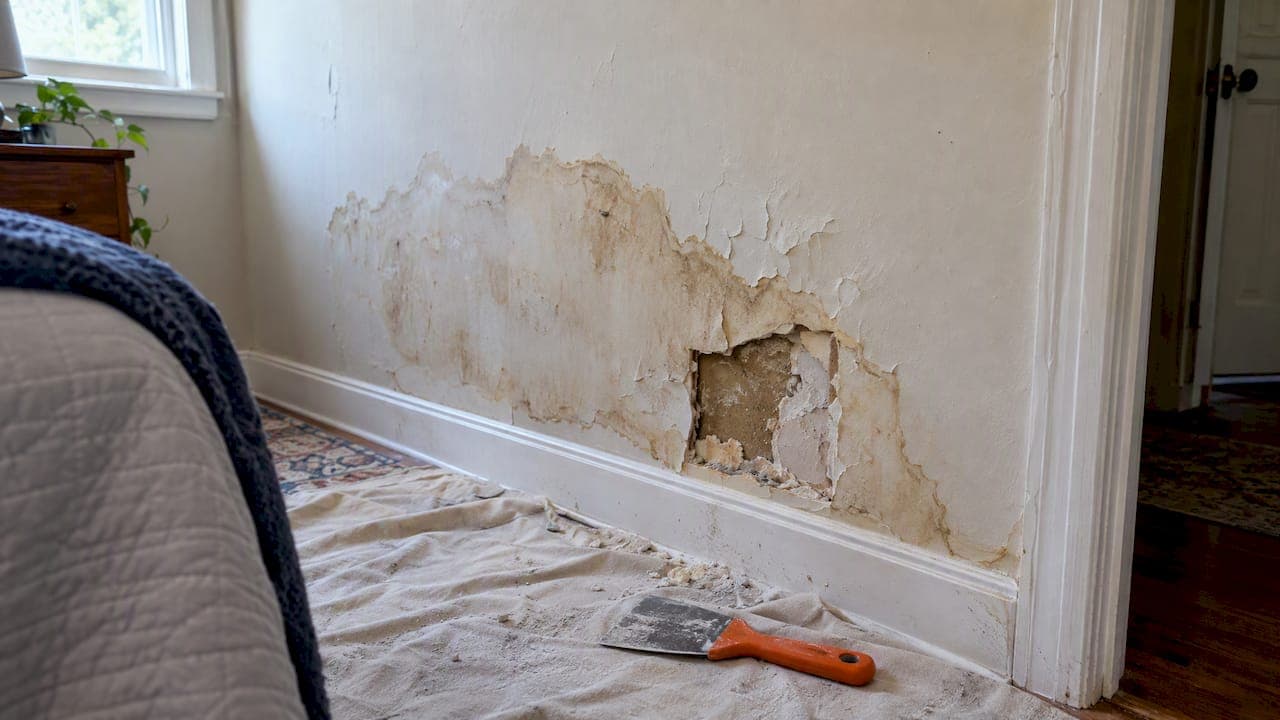
Drywall Water Damage Repair: Fix It or Replace It

Water-damaged drywall can sometimes be dried and repainted, but often it has to be cut out and replaced. The deciding factors are whether the leak is stopped, whether the water was clean, how fast the board dries, and whether the panel is still firm. Get any one of those wrong and you can end up painting over a mold problem that grows inside the wall.
This guide walks Maryland homeowners through that decision, then through the repair itself, for walls and ceilings alike.
TL;DR
- Stop the source first. A roof leak, supply line or appliance that is still dripping will undo any patch you make.
- Dry within 24 to 48 hours. Beyond that window, the odds of mold rise sharply, and swollen, soft or sagging board should come out.
- Clean water and firm board can sometimes stay. Floodwater, sewage and anything bowed or spongy cannot.
- Stain-blocking primer is not a repair. Paint only covers a stain on small, fully dry areas.
- Document before you demolish. Photos and receipts protect an insurance claim.
Table of Contents
- First, stop the water
- Document the damage before you touch anything
- Is it clean water, or something else?
- Repair or replace: the four conditions
- Warning signs worth checking
- Drying: the 24 to 48 hour window
- How to repair water-damaged drywall, step by step
- Ceilings are a special case
- Fire-rated and sound-rated assemblies
- When to call a professional
- Our perspective
- How Magnum Home Services can help
- Preventing the next stain
- FAQ
- Sources
First, stop the water
Every reputable source starts in the same place. As Fine Homebuilding’s water damage repair guide puts it, when a plumbing line or roof lets water into a wall or ceiling, you fix the leak first and only then seal stains and patch the drywall.
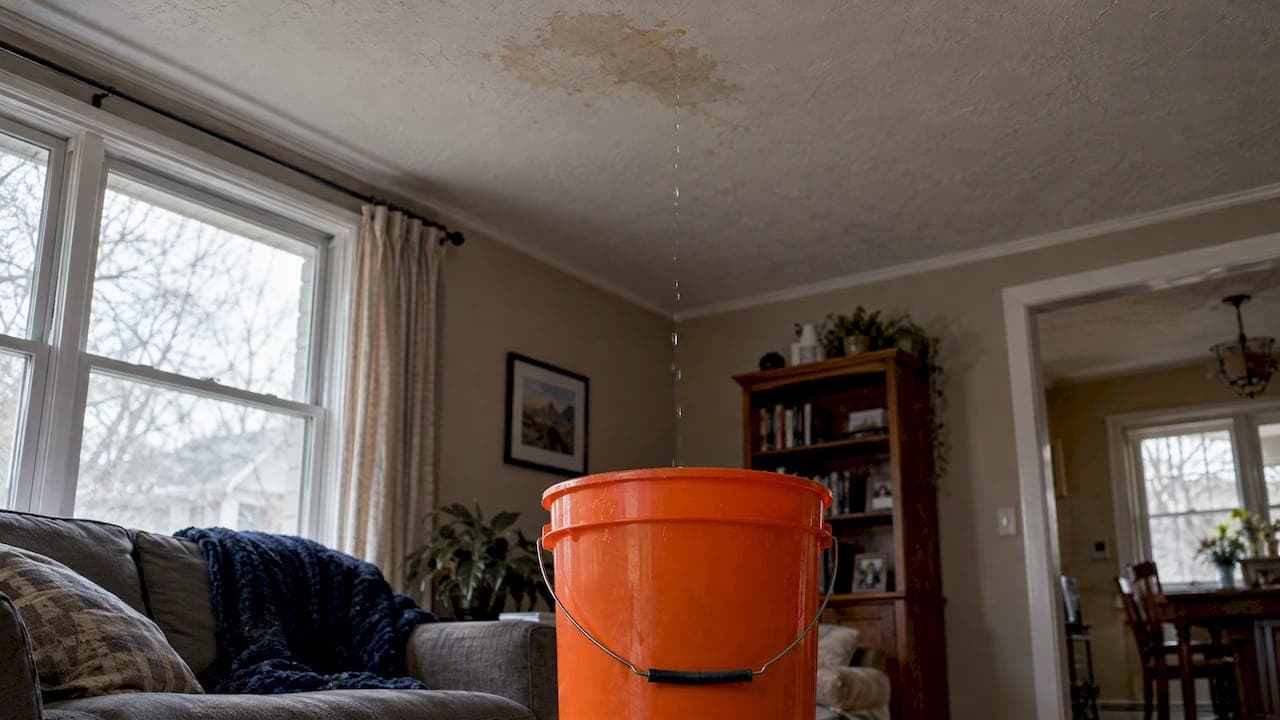
In our experience in Baltimore County, the source is more often overhead than people expect. A brown ring on a second-floor ceiling after a thunderstorm usually points to failed flashing, a lifted shingle or a worn pipe boot, not a plumbing problem. A ceiling stain that appears only when it rains is a roofing question. A stain that grows on dry days points to a supply line, a drain, an HVAC condensate line or an appliance.
If the source is the roof, a temporary tarp can hold the line until a real repair. We cover that sequence in our post on stopping a roof leak at the source before fixing the ceiling, and on how emergency roofing prevents long-term water damage.

Document the damage before you touch anything
Before you pull a single screw, photograph the stain, the ceiling, the floor below and any damaged belongings. FEMA advises photographing damage before repairs begin and keeping receipts for emergency work and damaged property, which matters if you file a claim.
A practical routine:
- Take wide shots of the whole room, then close-ups of each stain with a tape measure or coin for scale.
- Photograph the likely source, such as the ceiling directly under a bathroom or the roof area above.
- Keep every receipt for fans, tarps, plumber visits and disposal.
- Write down the date and time you first noticed the water.
A step-by-step guide to photographing water damage and recording cleanup expenses is also worth a look, although it is written in Swedish.
If the loss came from a storm, insurance restoration support from your contractor can make the paperwork far less painful.
Is it clean water, or something else?
The type of water changes the whole job. EPA and FEMA guidance separates clean-water events from contaminated ones.
- Clean water: a fresh supply-line leak, rain through a roof, an overflowing sink. Drying in place may be an option.
- Contaminated water: floodwater, sewage, wastewater and some appliance backups. The Gypsum Association recommends replacing panels exposed to these, because contamination can include bacteria and pollutants. Do not run fans until the water is known to be clean and sanitary.
A roof leak that has passed through insulation and sat for days is not strictly clean any more. If you are unsure, treat it as a replacement job.
Repair or replace: the four conditions
The Gypsum Association’s moisture guidance says panels exposed to water should be replaced unless a list of conditions is met. In plain terms, the board can stay only when:
- The leak is stopped.
- The water was clean.
- The panel can be dried thoroughly, generally within 24 to 48 hours depending on conditions.
- The board and fasteners are still structurally sound.
The EPA’s mold course adds a visible test: wallboard may be dried in place if there is no obvious swelling and the seams are intact. Otherwise, it has to come out. The same page notes that the wall cavity is the hardest part to dry.
That last point trips up many homeowners. A dry-feeling surface does not mean a dry wall. Fans can dry the room while the insulation and the back of the board stay damp. Restoration crews use moisture readings for exactly this reason.
Quick decision table
| What you see | Likely call |
|---|---|
| Small, dry, flat stain, leak fixed long ago | Seal with stain-blocking primer and repaint |
| Peeling or bubbling paint, board still firm | Scrape, dry, patch, prime, repaint; probe the area first |
| Swollen, soft or crumbling board | Cut out and replace |
| Ceiling that sags, bows or feels spongy | Replace; do not patch cosmetically |
| Visible mold larger than about 10 square feet, or unknown extent | Stop and call a professional |
| Floodwater or sewage | Remove and replace; use protective gear or hire experienced remediation |
As for mold, Angi’s homeowner guidance treats areas under about 10 square feet differently from larger or uncertain contamination, and recommends getting professional help when the source, extent or condition of the mold is unclear.
Warning signs worth checking
Look for discoloration, peeling or bubbling paint, cracking, sagging, seepage and mold. Press gently on the area with a screwdriver handle. Firm board that resists is a good sign. Board that dents, crumbles or feels like wet cardboard is finished.
Appearance alone is unreliable. A panel can look acceptable while it hides weakened paper facing or rusting screws, which is why the Gypsum Association stresses evaluation, not just a glance.
Drying: the 24 to 48 hour window
The EPA’s brief guide to mold and moisture says to dry water-damaged areas and items within 24 to 48 hours to prevent mold growth. The agency’s remediation guidance also cautions that mold can still occur even when materials are dried within that period, so inspect afterward.
What that means in a Maryland house, especially in humid July and August:
- Remove wet carpet, pad and furniture from the area.
- Use fans and a dehumidifier only when electricity is safe and the water is sanitary.
- Open the wall cavity if board is staying in place and you can ventilate it.
- Keep checking for a musty smell, which is often the first sign the cavity is still wet.
If water reached outlets, light fixtures or a ceiling fan box, shut off the circuit at the panel and have an electrician check before you restore power.
How to repair water-damaged drywall, step by step

This sequence follows the repair order laid out by Fine Homebuilding and federal housing guidance. It suits a limited, clean-water patch. For anything larger, or if mold is involved, skip to the professional section.
1. Mark and expose the damage
Turn off power to the area. Cut out loose tape, compound and any swollen or softened board. Remember that the cut line is chosen to open the cavity, not just to remove the visible stain. Walls & Ceilings magazine notes that contractors often cut horizontally along the wall, and that when full replacement is not needed, cutting and replacing 12 to 24 inches above the water line is common. The exact height depends on the water line, insulation, framing and wiring.
2. Inspect and dry the cavity
Check the framing, insulation and wiring. Wet insulation should be removed and replaced. Let studs and plates dry completely. This is the step people rush, and it is the one that decides whether mold appears six weeks later.
3. Cut a clean opening
Use a keyhole saw or drywall knife to make a square or rectangular opening. The edges must land on studs or on added blocking so the new panel has something to fasten to.
4. Fit the new board
Cut a replacement piece with roughly a 1/8-inch gap around it, which is what federal housing-repair guidance specifies. Fasten it flat and flush to the framing.
5. Tape and finish
The same guidance notes that fiberglass tape with quick-setting compound holds up better than paper tape and standard compound in flood-repair conditions. Apply thin coats, feather the edges wide, and sand between coats.
6. Prime and paint
Seal with a stain-blocking primer before repainting. Skipping this is the reason ghost stains return through fresh paint. Then repaint the whole wall or ceiling section, not just the patch, to avoid a visible flash.
Ceilings are a special case
Ceiling repairs carry extra risk. A ceiling that is soft, spongy or visibly bowed should not be patched cosmetically, because the panel may no longer be able to support itself. Water also pools above the drywall, so a small stain below can mean a heavy, saturated section above it.
If a ceiling is sagging, keep people out from underneath. Some homeowners puncture a small hole to drain trapped water into a bucket, but only do that if you can do it safely from a stable position and you are sure no wiring is in the way. When in doubt, call a contractor.
Fire-rated and sound-rated assemblies
Drywall is not only decoration. The Gypsum Association points to its role in passive fire resistance. Repairs in fire-rated or sound-rated assemblies, such as garage walls shared with living space, party walls in townhomes, or ceilings beneath another unit, must keep the original board type, fastener pattern and joint arrangement. In row homes across Baltimore, that detail matters. An improvised patch can change how the wall performs.
When to call a professional
Bring in a licensed contractor when:
- The water came from a flood, sewer backup or unknown source.
- Mold covers a large or unclear area.
- Ceilings sag or the damage spans more than one room.
- The cause is still the roof, and you cannot reach or fix it safely.
- You are filing an insurance claim and want the damage documented properly.
- Structural framing looks stained, soft or rotted.
A professional will check moisture behind the surface, not only on it, and will tie the drywall repair to the cause. That is the reason many Baltimore County homeowners prefer one contractor who handles the roof, the drying and the finish together.
Our perspective
We see the same pattern often. A homeowner patches and repaints a ceiling stain, and it reappears after the next storm. The paint was never the problem. The flashing, the pipe boot or the shingle above it was.
That is why we start with the roof or the plumbing, not the drywall. Roofing is the core of what we do, and we have been in the trade a long time. When we inspect a wet ceiling, we want to show the homeowner the evidence: where the water got in, how far it traveled, and whether the board can be saved or has to be cut out. Sometimes the honest answer is a small repair. Sometimes it is a full section.
We also carry the project through. Water damage restoration, structural repairs, painting and the roof repair itself can sit under one contractor, with electrical and plumbing handled by long-standing subcontractors when the job calls for them. That avoids the finger-pointing that happens when a ceiling painter, a plumber and a roofer each blame the other.
— Charles Hinkel
How Magnum Home Services can help
If your drywall is wet and you are not sure whether it can stay, we can inspect the area, find the source and give you an itemized estimate. Our water damage restoration service covers Towson and Baltimore County, and when the source is overhead, roof repair and storm and wind damage repair are handled by the same company. For emergencies, tarping is part of our roofing services. If plumbing or wiring is involved, we coordinate it through our plumbing and electrical subcontractors.
We also keep the repair tied to your insurance file, so photos, moisture findings and invoices tell one consistent story.
Preventing the next stain
- Have the roof inspected after major storms, and look closely at flashing, vent boots and valleys.
- Keep gutters and downspouts clear so water does not back up under the roof edge. Our post on soffit and fascia repair shows what to check at the roof edge.
- Replace worn supply lines on washers, dishwashers and toilets.
- Check caulk around tubs and showers every year.
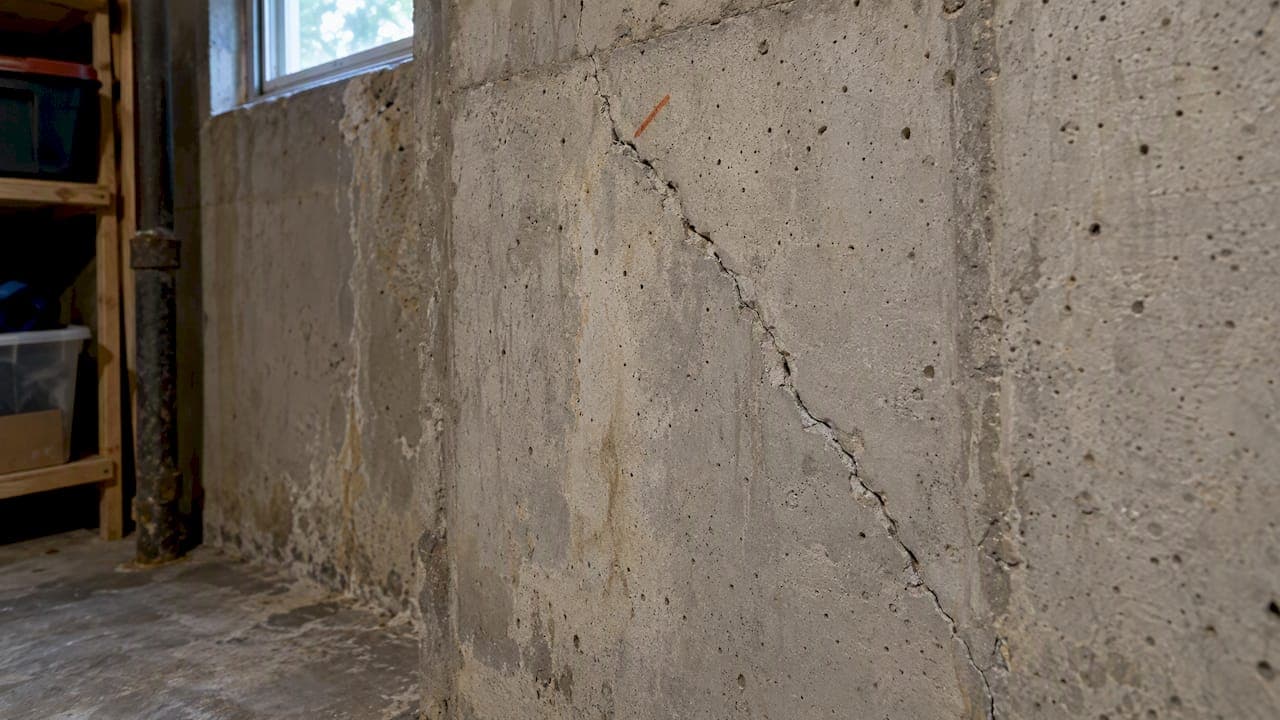
- If the damp is in the basement instead, look at waterproofing options, since basement drywall problems come from groundwater, not the roof.
FAQ
Can I just paint over a water stain on drywall?
Only if the area is small, completely dry and the leak has been fixed. Seal the stain with a stain-blocking primer first, then repaint. If the board is soft, swollen or bubbling, paint will not solve the problem and you need to cut it out.
How long does drywall take to dry after a leak?
The EPA’s target is to dry wet materials within 24 to 48 hours. Thick or saturated board, and the wall cavity behind it, can take longer. If it still feels damp or smells musty after that, plan on removal.
Can water-damaged drywall be repaired without replacing the whole sheet?
Often yes. You can cut out the damaged section back to the nearest studs, install a matching patch, then tape, finish, prime and paint. The cut usually extends above the visible water line so you can inspect the cavity.
Is water-damaged drywall dangerous?
It can be. Wet drywall can grow mold, and floodwater or sewage can leave bacteria behind. If the water was contaminated, or mold covers more than about 10 square feet or an unclear area, stop and call a professional.
Does homeowners insurance cover water-damaged drywall?
That depends on your policy and on the cause of the loss, so ask your insurer. Sudden events like storm damage are treated differently from long-term seepage. Photograph everything before repairs and keep every receipt for your claim.
Sources
- Gypsum Association: Moisture in Gypsum Panel Products
- Gypsum Association: Storms and Flooding Technical Resources
- EPA: Mold Remediation in Schools and Commercial Buildings, Chapter 4
- EPA: Mold Course Chapter 4
- EPA: A Brief Guide to Mold, Moisture and Your Home
- Fine Homebuilding: Repairing Water Damage
- Angi: How to Repair Water-Damaged Drywall
- U.S. Department of Energy: Repairing Walls & Floors
- FEMA: Damage documentation guidance
- FEMA: Clean and contaminated water guidance
- Walls & Ceilings: Flooded Drywall Inspection and Replacement Best Practices
Recommended
Free, no-pressure inspections across Towson & Baltimore County.
Keep Reading
More from the blog
Free Estimate
Get your free, no-pressure roof estimate
Tell us what's going on and we'll call you within one business hour. Same-week appointments available across Baltimore County.
- BBB A+
- Owens Corning Preferred
- EPA Lead-Safe
- EIFS Certified
- Licensed & Bonded