
Blog
Contractor Backed Soffit and Fascia Repair for Homeowners, When to DIY
- BBB A+
- Owens Corning Preferred
- EPA Lead-Safe
- EIFS Certified
- Licensed & Bonded
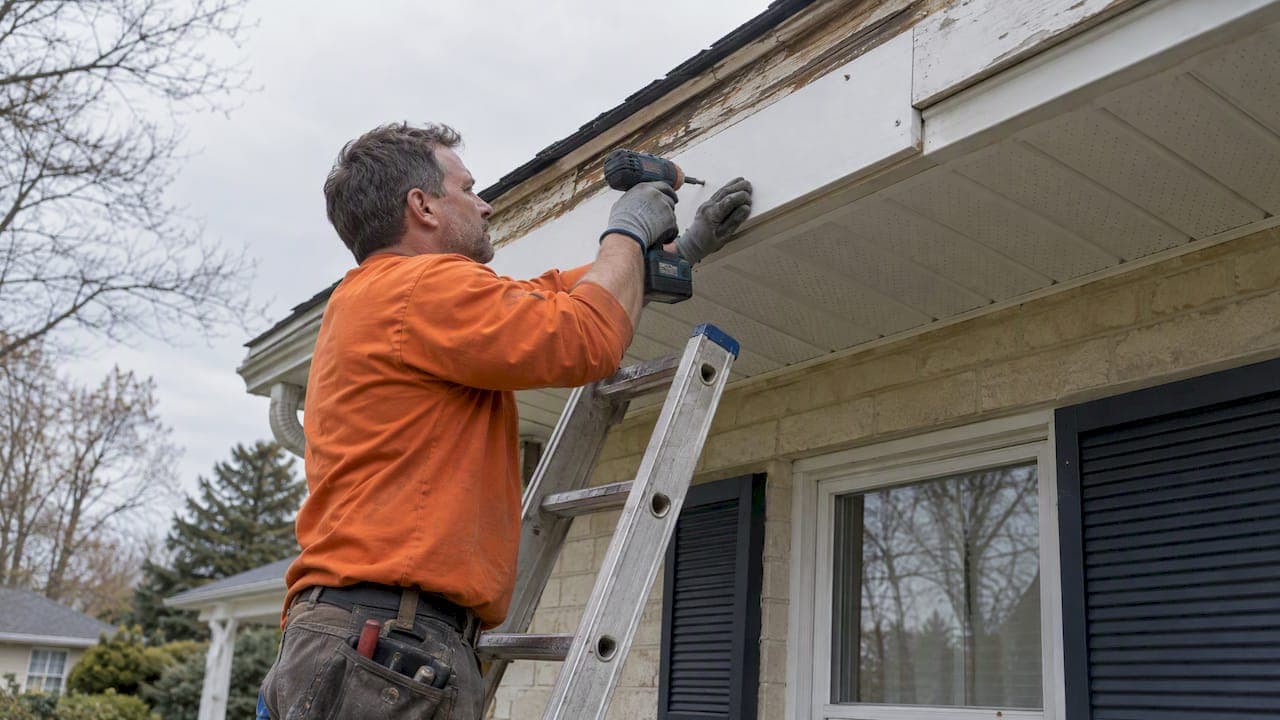
If the damage is small and reachable from a stable ladder, you can handle soffit and fascia repair yourself; if there is structural rot, multiple rafter bays affected, or the house is multi-story, hiring a contractor is the safer call. The deciding factors are the extent of the rot, the height and complexity of the roofline, and whether attic ventilation is already compromised. Any work at height should follow OSHA ladder safety rules, including three-point contact at all times.
TL;DR:
- If a screwdriver penetrates wood less than half an inch, patching or sealing may suffice; deeper damage usually requires board replacement.
- Most projects cost $500 to $2,600, while hidden rafter damage, material, stories, roofline complexity, and gutter removal can raise estimates.
- Call a professional if rot reaches the roof deck, affects more than two bays, or requires work above a one story ladder.
- Keep vented soffit openings clear and match replacement panels’ net free vent area; blocked intake airflow can trap moisture in the attic.
Table of Contents
- What soffit and fascia do and why keeping them intact matters
- Signs of damage: a quick inspection checklist
- How to assess and decide: repair, replace, or call a pro
- Step-by-step DIY soffit and fascia repair
- Materials, typical costs, and what drives the price
- Prevention and ventilation: stopping the next round of damage
- Field tips from Charles “Chuck” Hinkel and Magnum Home Services
- A short view: when DIY saves money and when a pro protects it
- Soffit and fascia repair, the Magnum Home Services way
- FAQ
- Sources
What soffit and fascia do and why keeping them intact matters
The fascia is the board that runs along the edge of the roofline, holding the gutters and capping the rafter tails. The soffit is the panel underneath the roof overhang, closing the gap between the fascia and the exterior wall. Together they’re typically built from wood, aluminum, vinyl, or fiber cement.
These components do more than finish the roofline:
- They keep rain, pests, and debris out of the attic and wall cavities.
- The fascia carries the weight of full gutters, so its structural soundness affects drainage.
- Vented soffits serve as the intake side of attic ventilation, pulling fresh air in so it can exit through a ridge or roof vent.
DOE attic ventilation guidance notes that low intake vents, paired with upper exhaust vents, are what keep an attic from trapping moisture. When soffit panels rot or get painted shut, that intake airflow drops and the whole ventilation system suffers.
Signs of damage: a quick inspection checklist
A walk around the house with a pair of binoculars and a flashlight will catch most problems before they spread.
- Peeling or bubbling paint on the fascia often signals trapped moisture behind the surface.
- Sagging or pulling gutters usually mean the fascia board underneath has softened and lost its grip on the hangers.
- Missing or warped soffit panels leave open gaps that pests use as entry points.
- The screwdriver test: press a screwdriver into the wood; if it sinks in easily, the fiber has broken down.
- Wet insulation or nesting material visible from the attic side points to a breach that’s been open for a while.
- Stained or darkened roof sheathing near the eaves is often the first visible clue to a leak that started at the soffit line.
Hidden damage is the dangerous kind. A fascia board can look fine from the ground while the rafter tail behind it has already softened.
How to assess and decide: repair, replace, or call a pro
Once you’ve spotted damage, the next step is sizing it up. A few rules of thumb make that call easier.
- If the screwdriver sinks less than half an inch, a patch or sealant repair is often enough; deeper penetration usually means the board needs to come out.
- Damage confined to one rafter bay is a manageable weekend project; rot spreading across multiple bays, or into the rafter tails themselves, points toward a contractor.
- Cost and timeline matter too: a single board replacement is a few hours of work, while a run affecting several bays can mean a day or more with scaffolding and helper labor.
- Structural work, including sistering a rafter tail or replacing framing, often triggers a local building permit, so check with your jurisdiction before cutting into anything load-bearing.
Pro Tip: Take photos before you probe anything. If you end up calling a contractor, those photos speed up the estimate and help confirm whether the damage has worsened since you first noticed it.
Step-by-step DIY soffit and fascia repair
Small, accessible jobs are well within reach for a careful DIYer who respects height and structural limits.
Safety first. Follow OSHA’s ladder standard, which calls for three-point contact and extending the ladder at least three feet above the roofline. Wear gloves, eye protection, and a hard hat if anyone else is working below.
Tools and materials: flat bar, circular saw, drill, exterior-grade deck screws, replacement fascia board matched to the original dimension, vented soffit panels or J-channel, caulk rated for exterior wood, and primer or paint to match.
- Support the gutter section with brackets or a helper before removing any fasteners, since dropping a full gutter run can bend the hangers.
- Remove the gutter and trim pieces covering the damaged fascia.
- Pry off the damaged board carefully to expose the rafter tails behind it.
- For minor surface rot, sister a new piece of lumber alongside the existing rafter tail rather than replacing the whole tail; this preserves structural continuity, a method professionals commonly use for localized damage.
- Cut and install the new fascia board, fastening it into solid rafter tail material with exterior screws.
- Install the new vented soffit panel, matching the net free venting area of the original so attic airflow isn’t reduced.
- Add rafter baffles if insulation has crept into the vent channel, keeping the path clear from soffit to ridge.
- Caulk seams, prime and paint exposed wood, then re-hang the gutter at its original slope.
Statistic Callout: Many soffit and fascia repair projects fall between roughly $500 and $2,600, depending on material and the extent of hidden rot. That range is a useful gut check for whether a quote you receive is in line with typical jobs.
Stop and call a professional if you find rot extending past the rafter tail into the roof deck, if the damage spans more than two bays, or if the work requires anything beyond a one-story extension ladder.
Materials, typical costs, and what drives the price
Material choice shapes both the upfront cost and how often you’ll be back up a ladder.
- Wood costs less per linear foot but needs repainting and recaulking every few years.
- Vinyl resists moisture well and needs almost no maintenance, though it can crack in extreme cold.
- Aluminum holds up over long gutter runs and doesn’t rot, making it a common choice for full-house replacement.
- Composite and fiber cement cost more upfront but last the longest with the least upkeep.
Beyond the material, price swings with the number of stories, the complexity of the roofline, gutter removal and re-hanging, and whether rafter tail repair is needed. Cost guides point out that hidden rafter damage found mid-job is one of the most common reasons an estimate changes once the old fascia comes down.
Prevention and ventilation: stopping the next round of damage
Most soffit and fascia failures trace back to water that had nowhere to go or air that couldn’t move. A short annual routine heads off both.
- Clean gutters each spring and fall so overflow doesn’t run down the fascia.
- Clear soffit vents of paint, dust, and nesting material so intake air keeps flowing.
- Check for wasp or bird nests blocking vent openings, especially after summer.
- Walk the roofline after major storms to catch loosened panels early.
Continuous soffit vents paired with a ridge vent, along with rafter baffles that keep insulation clear of the vent channel, are the setup DOE guidance recommends for balanced attic airflow. Where continuous soffit venting isn’t practical, low gable or eyebrow vents can fill the same role.
Pro Tip: A properly installed drip edge under the shingles and over the fascia keeps water from ever reaching the board in the first place, often the cheapest prevention step of all.

Field tips from Charles “Chuck” Hinkel and Magnum Home Services
After close to 31 years in roofing, a few habits separate a durable repair from one that fails again in two seasons. We photograph every section before probing it, then check at least two bays on either side of visible damage, since rot rarely stays confined to a single board. Gutter hangers tell their own story: if they’re pulled loose or bent, the fascia behind them has usually already softened.
We always support the gutter run before fascia removal and re-hang it at its original slope so water keeps draining toward the downspout. When we write an estimate, we itemize any rafter tail repair separately, include photos of what was found, and note the warranty terms and whether the scope supports an insurance claim. As an Owens Corning Preferred Contractor, we apply that same documentation standard to every roofline repair we touch.

A short view: when DIY saves money and when a pro protects it
DIY repair makes sense for a single accessible board with shallow rot and a safe, low-height ladder setup. It stops making sense the moment the damage reaches structural framing, spans multiple bays, or sits two stories up, where a fall carries real consequences and a missed ventilation detail can cause slower, costlier damage down the road. Paying for professional work there buys code compliance, a warranty, and often insurance support that a weekend repair can’t.
— Charles Hinkel
Soffit and fascia repair, the Magnum Home Services way
When the damage goes beyond a weekend fix, we handle soffit and fascia repair as part of our broader roof repair work, alongside gutters, siding, and structural repairs for rafter tails that need more than a sistered board. We serve Towson, Baltimore City, Baltimore County, and nearby Harford and Anne Arundel County communities.

Every inspection comes with photos of what we find, an itemized scope broken out by task, manufacturer-backed warranty terms, and support if your damage ties into an insurance claim. If you’d rather have a certified crew assess the rot, support the gutters properly, and match the ventilation to code than spend a weekend on a ladder, request a roof repair estimate and we’ll walk the roofline with you.
FAQ
How much does it cost to repair fascia and soffit?
Most soffit and fascia repair projects fall between roughly $500 and $2,600, depending on the material and how much hidden rot is found once the old board comes off. Jobs that only need a short section patched land at the lower end, while those involving rafter tail repair or multiple bays climb toward the higher end.
How much does it cost to replace soffits and fascia?
Full replacement costs track closely with repair costs but scale with the total linear footage, material choice, and number of stories involved. Aluminum and vinyl tend to cost more upfront than wood but need less maintenance over time, which is worth weighing against the sticker price alone.
How can I repair my soffit and fascia myself?
Support the gutter, remove the damaged board, sister in new lumber for minor rafter tail rot, and install a matching fascia board and vented soffit panel, following OSHA ladder guidelines for three-point contact throughout. This works well for small, single-story, easily reached damage; anything involving multiple bays or structural rot calls for a professional.
Do roofers repair soffit and fascia?
Yes, since soffit and fascia sit directly at the roofline and interact with gutters and attic ventilation, most roofing contractors handle them as part of roof repair work. We fold soffit and fascia repair into our own roof repair scope whenever rafter tails or ventilation are involved.
Sources
- OSHA standard 1926.1053 — Ladders
- Attic air sealing, insulating and ventilating guidance (DOE / Building America)
- How Much Does Soffit and Fascia Repair Cost? (HomeGuide)
- How much does soffit and fascia repair cost? (Angi)
Recommended
Free, no-pressure inspections across Towson & Baltimore County.
Keep Reading
More from the blog
Free Estimate
Get your free, no-pressure roof estimate
Tell us what's going on and we'll call you within one business hour. Same-week appointments available across Baltimore County.
- BBB A+
- Owens Corning Preferred
- EPA Lead-Safe
- EIFS Certified
- Licensed & Bonded