
- BBB A+
- Owens Corning Preferred
- EPA Lead-Safe
- EIFS Certified
- Licensed & Bonded
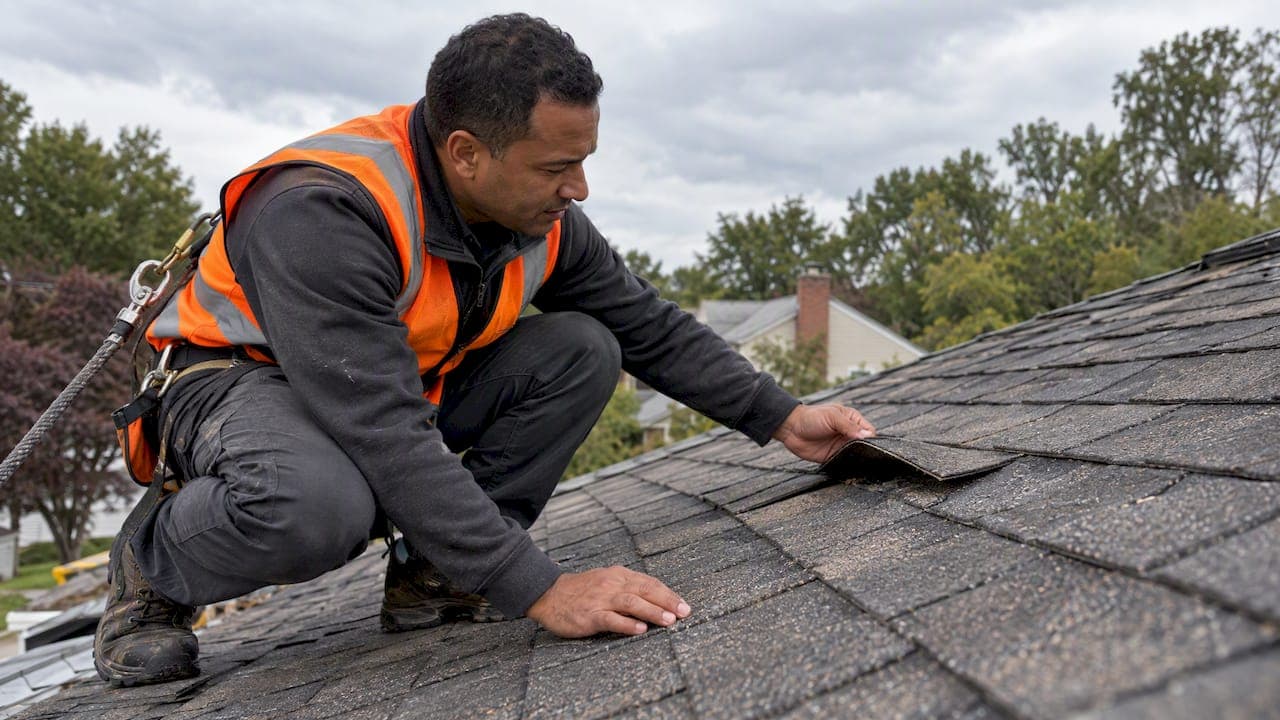
Roof Insurance Claim Process: Steps for Maryland Homeowners

A roof insurance claim moves in a fixed order: protect the property, document the damage, report it to your insurer, meet the adjuster on the roof, review the estimate, then repair and collect any remaining payment. Done in that order, with good photos and a clear head about your policy, most of the stress goes out of it. Below is each step as we see it from the roof in Towson and across Baltimore County, plus the points where claims most often stall.
TL;DR
- Stop further damage first (a tarp is a normal, reimbursable-type step), photograph everything, and save every receipt.
- Read your policy for your deductible and whether roof payment is replacement cost or actual cash value before you call.
- Report the claim promptly, walk the roof with the adjuster, and have your contractor there to discuss the technical details.
- Don’t guess at causes, don’t sign over your whole claim check, and hold off on permanent repairs until the damage has been inspected.
- If the estimate looks low or the claim is denied, you have options: supplements, appraisal, mediation and your state insurance regulator.
Table of Contents
- Step 1: Make the roof safe and stop the water
- Step 2: Document the damage before anything changes
- Step 3: Read your policy before you call
- Step 4: Decide whether to file at all
- Step 5: Report the claim
- Step 6: Prepare for the adjuster’s inspection
- Step 7: Review the estimate and ask for a supplement
- Step 8: Get paid, repair, and collect the rest
- How long does a roof claim take?
- If your claim is delayed, underpaid or denied
- Our perspective: why a roofer belongs in the claim from day one
- Roof claim help in Towson and Baltimore County
- FAQ
- Sources
Step 1: Make the roof safe and stop the water
The first job after a storm is not the phone call to the insurer. It is keeping rain out of the house. Insurers expect you to limit further damage, and state regulators say the same: take reasonable steps to protect the property and keep your receipts. That guidance comes from the Texas Department of Insurance, but the principle is standard across homeowners policies.
In practice that means:
- Stay off a wet, damaged roof. Look from the ground and the attic instead.
- Move belongings away from ceiling stains and put a bucket under active drips.
- Have a roofer tarp the damaged section. A proper tarp is nailed over the ridge or secured with battens, not just weighted with sandbags.
- Keep the invoice for the tarping and any materials.
One caution: make only the repairs needed to prevent more damage. Regulators warn homeowners to avoid permanent repairs until the damage has been inspected or the insurer approves them. Tarping is temporary. Replacing shingles or decking before the adjuster sees the roof can erase the evidence.
If water is already coming through the ceiling at night, see our guide on when to call for emergency roofing services, and why fast mitigation prevents long-term water damage.
Step 2: Document the damage before anything changes
Photos and video are the backbone of a claim. The official advice is simple: photograph or video the damage if possible and make a list of damaged property.
A useful roof documentation set includes:
- Wide shots of every slope and the whole house, so the damage is placed in context.
- Close-ups of missing or creased shingles, exposed nails, dented vents, bent flashing and damaged ridge caps.
- Collateral damage: dented gutters, downspouts, window screens, siding and soft metals. These help show that a storm hit your property. Our post on hail damage to siding and why to check gutters before filing explains this in detail.
- Interior photos of ceiling stains, wet insulation and attic decking, with a date on each.
- The storm itself: the date, the time, and what you saw or heard.
Take the pictures before the tarp goes on, then again after. If you hire us, we photograph and document the roof as part of the claim support, so your homeowner photos and a contractor’s report back each other up.
Step 3: Read your policy before you call
Five minutes with your declarations page saves a lot of surprises. Look for these items.
Your deductible
A deductible is subtracted from your claim settlement. Some policies set a flat dollar amount, others a percentage of your home’s insured value for wind or hail. Check which applies to you, because it changes the math in Step 8.
Replacement cost vs. actual cash value
This is the single biggest factor in how much you receive for a roof.
| Coverage type | What it pays | What to expect |
|---|---|---|
| Replacement cost value (RCV) | The cost to repair or replace without deducting depreciation | The insurer may first pay the actual cash value, then release the rest once you prove the work was done |
| Actual cash value (ACV) | The depreciated cost to repair or replace | A 15-year-old roof pays out far less than a new one costs |
The National Association of Insurance Commissioners explains both terms, and notes that with replacement-cost coverage the insurer may pay actual cash value first and the difference after you provide evidence of the repair or replacement. That held-back amount is often called recoverable depreciation. Ask your adjuster in writing how it will be released.
Exclusions and roof-age schedules
Policies commonly exclude gradual wear and tear, and some use a roof-age payment schedule. Read the language on wind, hail and water intrusion. If anything is unclear, call your agent and ask them to point to the exact paragraph.
Your reporting window
Many policies give you up to a year to report a claim, though the deadline depends on your policy and state law. Do not wait that long. Evidence fades, and later storms make it harder to pin damage on a single event.
Step 4: Decide whether to file at all
Not every damaged roof deserves a claim. The NAIC puts it plainly: minor damage may be worth paying for yourself, but if repairs will likely cost more than your deductible, consider filing.
Here is a practical way to think about it:
- Get a roof inspection and a written repair estimate first.
- Compare the estimate to your deductible.
- If the repair is clearly above the deductible, or the damage looks widespread, file.
- If it is a handful of shingles and a small repair, paying directly may be simpler.
A free inspection from a roofer who works with insurance claims tells you which side of that line you are on. We would rather show you the evidence and tell you the roof only needs a repair than sell a replacement you do not need. If the damage is limited, our roof repair team can handle it without a claim.
Step 5: Report the claim
Call your insurance company or use its app or website to open the claim. Have your policy number, the date of the storm, and a short, factual description of what you found. Contacting your insurer to start the claim is the formal start of the process, and you should get a claim number.
Write down:
- The claim number and the name of the representative
- The date and time of your call
- What you were told about next steps and timelines
Your insurer may send an adjuster, rely on aerial imagery, or ask you to get a contractor’s inspection first. Each insurer handles it differently.
You may be asked for a sworn statement of loss. Timing varies by state; for example, some regulators note that insurers may ask for proof of loss within 60 days of the company’s request. Check the deadline in your own paperwork and calendar it.
Step 6: Prepare for the adjuster’s inspection
The adjuster works for the insurer. As one insurance professional puts it, adjusters are trained to evaluate a claim from the carrier’s perspective, which is why you should come prepared with your own evidence.
Before the visit:
- Print or load your photos, the tarping invoice and the contractor’s inspection report.
- Make a list of every area of concern, including gutters, siding, vents and interior stains.
- Ask your roofer to attend.
Regulators recommend that you walk around with the adjuster and consider having your contractor present to discuss estimates and technical points. A roofer on the roof can point out creased shingles, failed seal strips, test squares and damaged flashing that are easy to miss in a 30-minute visit. That is exactly the role we play when we meet adjusters on the roof.
What to say, and what not to say
Keep the conversation factual. Do not speculate on cause. Attorneys who handle these claims advise homeowners to avoid guessing about what caused the damage, and instead say they are unsure and waiting for a professional assessment. Offhand remarks such as “the roof was getting old” or “we never got around to maintenance” can be used to exclude coverage for gradual wear and tear.
Good phrases: “The storm was on this date.” “Here is what I observed.” “I’d like my contractor’s report reviewed.”
If your insurer asks for a recorded statement, you can take a moment first. One Maryland-licensed-market law firm notes that in states including Maryland, high-pressure tactics to get a recorded statement without time to consult counsel may be considered bad faith. If a claim is large or complicated, speak with an attorney before giving one.
Step 7: Review the estimate and ask for a supplement
After the inspection, the insurer issues a scope and estimate. Read it line by line against your contractor’s estimate. Things that are commonly missed or underpriced:
- Drip edge, starter strips and ridge caps
- Ice and water shield in valleys and at eaves
- Flashing around chimneys, skylights and walls
- Decking replacement where wet or damaged
- Haul-off and permit costs
- Code-required items for your county
If your contractor finds damage or line items the adjuster missed, they can submit a supplement with photos and itemized pricing. This is routine and not a sign of a fight. We provide itemized estimates so each line can be matched to the adjuster’s scope.
If the disagreement is about the amount of loss, your policy may offer an appraisal process. A coverage denial is different: disputes over whether the loss is covered at all are generally excluded from appraisal, which typically resolves disagreements over the amount. That source discusses commercial property, but the distinction commonly appears in homeowners policies too, so read yours.
Step 8: Get paid, repair, and collect the rest
Once the claim is approved, the first payment typically arrives minus your deductible. Here is a simple example with made-up round numbers to show the logic:
| Item | Example |
|---|---|
| Approved roof estimate (RCV) | $14,000 |
| Depreciation held back | $4,000 |
| First payment (ACV) | $10,000 |
| Deductible | $1,500 |
| Check you receive first | $8,500 |
| Released after proof of repair | $4,000 |
These figures are illustrations only, not a quote or a typical result. Your policy terms decide the real numbers.
When the work is done, send your insurer the final invoice and completion photos to release any recoverable depreciation. Keep copies of everything.
Two practical warnings at this stage. First, regulators advise homeowners to be wary of scams and not sign their entire claim check over to a contractor. Second, read any contract or assignment form before you sign it, and confirm the contractor is licensed and insured in Maryland.

How long does a roof claim take?
There is no single answer. Simple wind claims with clear photos can move quickly, while hail claims with disputed scope or supplements can take much longer. Insurers must follow deadlines, but those vary significantly by state. Maryland’s rules are set by the Maryland Insurance Administration, so check its site or call your insurer for the exact timelines that apply to you, and ask your adjuster to confirm in writing what is still needed.
A few habits shorten the process:
- Send complete documents the first time.
- Answer requests the same day.
- Keep a log of every call and email.
- Have your contractor handle the technical back and forth.
If your claim is delayed, underpaid or denied
Start by asking for the reasons in writing. Then:
- Request a re-inspection with your roofer present and new evidence.
- Submit a supplement for missed items.
- Use appraisal if the dispute is over the amount and your policy allows it.
- Contact your state insurance regulator. In Maryland that is the Maryland Insurance Administration, which takes consumer complaints.
- Consider mediation or legal action. If a dispute remains unresolved after appraisal or settlement attempts, policyholders may have the right to sue or use alternative dispute resolution such as mediation.
For denials involving coverage, talk to an attorney who handles first-party property claims. A contractor can supply evidence, but legal interpretation of your policy is not our role.
Our perspective: why a roofer belongs in the claim from day one
We have worked on roofs for close to 31 years, and the pattern is consistent. Claims go wrong less because the storm damage is unclear and more because nobody documented it well, or because the homeowner was left to explain shingle failure to an adjuster alone.
That is why we start with an honest inspection and show you the evidence either way. If the roof needs a repair, we say so. If it needs replacement, you will see the photos and an itemized estimate that lines up with the adjuster’s scope.
We meet adjusters on the roof, point out what matters, and carry the restoration through, including emergency tarping the same night when water is getting in. As an Owens Corning Preferred Contractor, we install to manufacturer standards, and our goal is a claim that covers the work the roof really needs.
One crew from the first tarp to the last ridge cap means fewer handoffs and fewer places for a claim to fall apart.
Charles Hinkel
Roof claim help in Towson and Baltimore County
We handle storm damage and insurance restoration for homeowners in Towson, Lutherville-Timonium, Cockeysville, Owings Mills, Perry Hall, and waterfront areas such as Dundalk, Essex and Middle River. That includes emergency tarping, damage documentation, adjuster meetings and the repair or replacement itself. Our storm damage and insurance restoration page explains how we work, and you can see insurance restoration in Towson and Baltimore County for more detail.

If a storm just hit, call us for an inspection. We offer 24/7 storm response, and our 5.0 Google rating across 102 reviews reflects the homeowners we have worked with. When the claim is approved and the roof needs replacing, our roof replacement service takes it from there, and our storm and wind damage repair covers the smaller fixes.
FAQ
What is the first thing to do after roof damage?
Make the property safe and limit further damage, usually with a tarp, then photograph everything before repairs. Keep every receipt. Then report the claim to your insurer. Avoid permanent repairs until the damage has been inspected or your insurer approves them.
Is it worth filing a roof claim?
It depends on your deductible and the repair cost. If the repair will likely cost more than your deductible, filing is worth considering, while minor damage may be cheaper to fix yourself. A written estimate from a roofer helps you decide.
What should I not say to a roof insurance adjuster?
Don’t speculate about the cause or blame age or lack of maintenance. Stick to what you saw and when, and say you are waiting for a professional assessment where you are unsure. Share your photos and your contractor’s report.
Does insurance pay for a new roof?
Sometimes. Replacement-cost coverage pays to replace without deducting depreciation, though the insurer may pay actual cash value first and the rest after the work is done. Actual-cash-value coverage pays the depreciated amount. Your policy and the extent of damage decide it.
Can a contractor keep my whole insurance check?
You should not sign your entire claim check over to a contractor. Regulators advise caution about scams and about assigning payment. Pay attention to what a contract says before you sign.
Sources
- How do I file a homeowners insurance claim? (Texas Department of Insurance)
- Post-Disaster Claims Guide (NAIC)
- How to Submit a Claim (North Dakota Insurance Department)
- Storm / Flood Claim Information (Hawaii Insurance Division)
- How to file a storm damage insurance claim (Insurance.com)
- What to Do in the First 48 Hours After a Property Loss
- Home Insurance Claim: What Not to Say
- Why You Need a Lawyer Before Giving a Recorded Statement
- Commercial Property Claim Delays Explained
Recommended
Free, no-pressure inspections across Towson & Baltimore County.
Keep Reading
More from the blog
Free Estimate
Get your free, no-pressure roof estimate
Tell us what's going on and we'll call you within one business hour. Same-week appointments available across Baltimore County.
- BBB A+
- Owens Corning Preferred
- EPA Lead-Safe
- EIFS Certified
- Licensed & Bonded