
- BBB A+
- Owens Corning Preferred
- EPA Lead-Safe
- EIFS Certified
- Licensed & Bonded
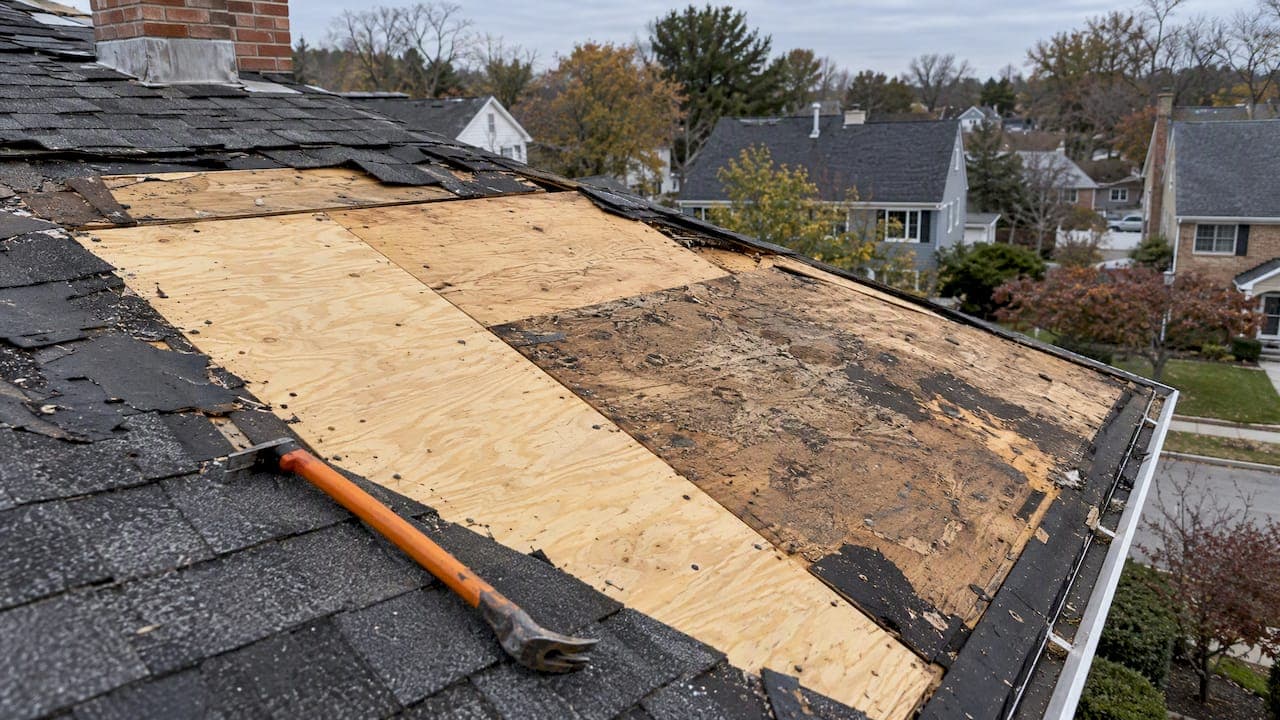
Roof Decking Replacement Cost: What to Expect in 2026

Roof decking replacement usually costs somewhere between $75 and $220 per sheet for spot repairs, and between about $2 and $6 per square foot when a large area has to come off. A full redeck on a typical house lands in the low-to-mid thousands of dollars, and it can go higher on a complex roof. The final number depends on how much of the decking is actually damaged, and nobody can know that until the old shingles are off. That is why a good estimate treats decking as a per-sheet allowance rather than a fixed price.
Below, we break down the published cost ranges, what pushes your price up or down, how to read a decking line in a roofing estimate, and when insurance may help.
TL;DR
- Spot repair: published 2026 ranges run about $75 to $220 per installed sheet of plywood or OSB, depending on the source and region.
- Full redeck: commonly $2 to $6 per square foot, or roughly $2,000 to $6,000 for a 2,400-square-foot house, and more on steep, multi-plane roofs.
- The real number is set at tear-off. Ask for a written per-sheet price and photos of every sheet replaced.
- Insurance may pay for decking damaged by a covered storm, but rot from long-term leaks or age is usually a maintenance issue. Your policy’s depreciation and deductible terms decide the payout.
Table of Contents
- What roof decking is and why it fails
- Roof decking replacement cost by project size
- What drives the price up or down
- How to read the decking line in your estimate
- Can you see decking damage before the roof comes off?
- Will insurance pay for new roof decking?
- Our perspective: inspect first, price by the sheet
- Repair or replace: where decking fits in the decision
- Get a decking inspection from Magnum
- FAQ
- Sources
What roof decking is and why it fails
Roof decking, also called sheathing, is the layer of plywood or oriented strand board (OSB) panels nailed across the rafters or trusses. Shingles, underlayment and flashing all sit on top of it. It carries the weight of the roof, snow and the people who work on it, and it gives the nails something solid to hold.
Decking fails for a handful of reasons:
- Slow leaks. A bad flashing detail, a cracked pipe boot or a worn valley lets water in a little at a time. The panel stays damp, softens and eventually rots.
- Attic moisture. Poor ventilation lets warm, humid air condense on the underside of the panels, which can darken, delaminate or mold them even when the shingles look fine.
- Storm damage. A fallen limb or a tree strike can crack or puncture panels.
- Age. Decking on very old roofs can dry out, split or lose nail-holding strength.
University of Minnesota Extension notes that roof drainage-plane components have to be layered so water is directed outward, and that improper flashing can let water into the building. In other words, damaged decking is almost always a symptom. The leak that caused it has to be fixed, or the new panels will fail the same way.
Roof decking replacement cost by project size
Published ranges differ because they draw on different contractor data, so treat them as planning brackets, not quotes. Here is how the 2026 figures from the sources we reviewed line up.
| Scope | Typical published range | Source |
|---|---|---|
| One sheet, installed | $85 to $220 | The Roofing Brief |
| Small spot replacement | $75 to $150 per sheet | ArchitectureCourses.org |
| Patch of 5 to 10 sheets | $450 to $1,500 | The Roofing Brief |
| Partial redeck, 15 to 25 sheets | $1,200 to $3,500 | The Roofing Brief |
| Partial repair, larger | $500 to $2,500 or more | ArchitectureCourses.org |
| Full redeck, 2,400 sq ft house (about 30 to 40 sheets) | $2,000 to $6,000 | The Roofing Brief |
| Full redeck during a reroof, wide range | $1,900 to $17,000 or more | ArchitectureCourses.org |
| Large-area replacement | $2 to $6 per square foot | ArchitectureCourses.org |
A few things to notice. The per-sheet price looks high next to the material cost because the panel is a small part of the job. Most of what you pay for is labor: pulling the old panel, cutting it out cleanly, fitting and nailing a new one to the rafters, and handling disposal. A single sheet covers 32 square feet, so a 1,000-square-foot roof section takes roughly 31 to 32 sheets before cuts and waste.
The second point is that a standalone deck repair, with no reroofing, is costlier per sheet. The Roofing Brief reports $800 to $3,000 for a standalone deck repair without reroofing, because shingles around the repair have to be lifted and then replaced. Doing the work during a roof replacement, when the shingles are already off, is the cheapest time to swap bad panels.
A worked example
Say your roof has 2,400 square feet of surface and the crew finds 12 bad sheets at tear-off. At the single-sheet range above, that is $1,020 to $2,640 on the decking line. If the crew had instead priced a blanket “redeck everything” allowance and the panels turned out to be sound, you would be paying for 75 sheets you did not need. The reverse also happens: a contractor who leaves the line vague can bill whatever it likes later. Pricing by the sheet and documenting each one fixes both problems.

What drives the price up or down
The published range is wide for good reasons. This Old House lists the main roof-repair cost drivers as extent of damage, roofing materials, roof design, labor, roof age, weather, season and local labor costs. For decking specifically, these matter most:
- How much is damaged, and where. Five bad sheets clustered along one eave are a small job. Five sheets scattered across three roof planes cost more, because each repair needs its own shingle removal and re-flashing.
- Pitch and access. ArchitectureCourses.org points out that a low-slope, accessible roof and a steep, multi-plane roof are different jobs even when the measured area is the same. Steep roofs need more safety equipment and move slower.
- Complexity. Valleys, eaves, vents, skylights and chimneys all add flashing work and cutting.
- Panel material and thickness. OSB is the cheaper default. Plywood costs more. 7/16-inch APA-rated OSB at 24-inch spacing is the common residential minimum for asphalt shingles, while thicker plywood is used on heavier roofs or where moisture is a concern. Your local code and the roofer’s inspection decide what is right for your house.
- Local labor rates and season. Busy periods after big storms tighten crew availability and can push prices up.
- Permits. Structural work can trigger permit requirements. Ask your contractor to confirm what your county requires before the job starts.
In the Baltimore area, older rowhouses and mid-century Baltimore County homes often have plank (board) sheathing or thinner panels than you would find on new construction. Decking in the attic of a Towson or Lutherville house that has had decades of poorly ventilated summers can be in worse shape than the shingle surface suggests. We cover what we see in the field in the perspective section below.
How to read the decking line in your estimate
The decking line is the part of a roofing estimate that is most often misunderstood. It usually appears in one of three ways:
- Included in a flat price. The contractor absorbs some amount of replacement. Ask exactly how many sheets are covered and what happens after that.
- A per-sheet allowance. The contract states a price per sheet, and you pay only for what is found to be bad. This is the fairest structure for most homeowners.
- “To be determined.” No price at all. Avoid signing without a unit price in writing.
Before you sign, get these items in writing, as ArchitectureCourses.org recommends: the per-sheet price, panel material and thickness, fastening, flashing scope, and whether disposal is included. Also require photos of the replaced sheets before the underlayment goes down. Once the roof is covered, no one can verify what was under it.
A solid estimate is itemized. FEMA’s guidance on damage estimates says they should be itemized and include square-foot specifications, and that photos, invoices and receipts help support claims. That principle applies whether the money comes from your pocket or an insurer.
Questions worth asking any roofer
- What is your price per sheet if the decking is bad, and is that price the same for the first sheet and the fiftieth?
- What thickness and type of panel will you install?
- Will you photograph each replaced area and send the photos to me?
- Do you stop and call me before going beyond the allowance?
- Does the price include hauling away the old panels?
Can you see decking damage before the roof comes off?
Partly. You can check from the attic with a flashlight on a dry day. Look for dark staining on the underside of the panels, rust on nail tips, daylight at the ridge or around vents, sagging between rafters, and a musty smell. Damp insulation below a stain is a strong sign of an active leak. On the roof itself, soft or spongy spots underfoot, shingles that sag between rafters or curled shingles in one area point toward a problem below. Do not walk a wet or steep roof to find out. If you see signs, have a roofer inspect it and show you photos of what they find.

Even a careful inspection cannot count every bad sheet. Decking can look fine from above and be rotten on its underside. This is why a per-sheet price is better than a guess.
Will insurance pay for new roof decking?
Sometimes. If a covered event such as wind, hail or a fallen tree damages the decking, the replacement is generally part of the claim. If the decking rotted because of a long-term leak, poor ventilation or age, most policies treat that as maintenance and exclude it. Your policy language is what matters, so read it or ask your insurer.
How much you receive depends on the type of coverage. The NAIC explains that actual-cash-value coverage deducts depreciation, while replacement-cost coverage pays to repair or replace with like kind and quality, and that your deductible and policy limits determine your share and the maximum payment. On an older roof with ACV coverage, the check can be much smaller than the invoice.
What to document after a storm
State insurance regulators give consistent advice. The New Mexico Office of Superintendent of Insurance, for example, says to photograph or video the damage before cleanup or repairs, contact your insurer promptly, make only the repairs needed to prevent further damage, save receipts, and keep a log of who you spoke with and when. Permanent repairs should wait until the insurer has had a chance to inspect.
In practice, that means:
- Take wide shots and close-ups of the roof, ceilings and attic, with timestamps.
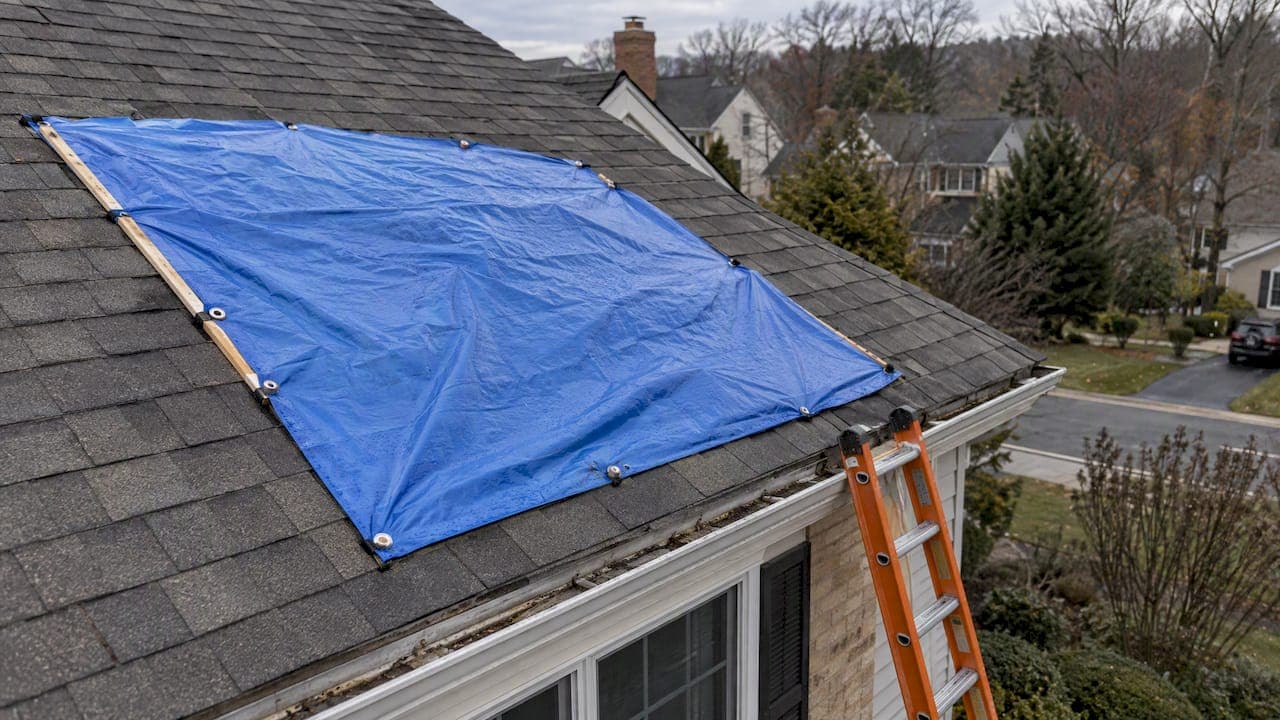
- Have a roofer tarp the opening the same day so water does not cause more damage.
- Save the tarp invoice and any material receipts.
- Ask your roofer to photograph any decking that is damaged, with a tape measure or chalk marks for scale, before it is removed.
For a deeper walk-through of documentation that supports a claim, see this guide on roof damage documentation for an insurance claim. If you want to understand what we do after a storm, our storm damage roof repair and insurance restoration page explains the process, and our guide on when to call for emergency roofing services helps you decide how urgent your situation is.
Our perspective: inspect first, price by the sheet
We have been roofing in Towson and Baltimore County since 2013, and our owner has worked in the trade for close to 31 years. Here is how we think about decking.
Most homeowners who call us about a roof that is 10 to 20 years old assume they need a repair. Sometimes that is true, and sometimes the surface is fine and the problem is a failed flashing or a vent boot. We would rather show you the evidence than sell you a bigger job. If the decking is sound, we say so. If it is not, we show you photos.
We believe the decking line should never be a surprise. A homeowner should know the unit price before work starts, and should see every replaced sheet documented. That is how a contractor stays accountable on a part of the roof that disappears under new shingles.
We also think the best time to fix decking is when the shingles are already off. Paying a premium to repair a few sheets on a roof you will replace in two years is usually a poor trade. If your roof is near the end of its life, it is worth asking what a replacement would cost versus a repair that gets you only a little more time.
Our crew handles structural work, framing and roofing in-house, so a rotted rafter tail or a sagging section found at tear-off does not need a separate contractor. And because we work with insurers regularly, we photograph and document damage, meet the adjuster on the roof when needed, and carry the restoration through.
— Charles Hinkel
Repair or replace: where decking fits in the decision
Decking damage changes the repair-or-replace math in a few ways.
- Isolated damage on a young roof. A few bad sheets from a fallen branch can be repaired. Our roof repair service covers this kind of work.
- Widespread softness. If a large area feels spongy or the attic shows broad staining, a replacement is usually the better value, since the shingles have to come off anyway. See our roof replacement page for how that process runs.
- Framing involved. If rafters or trusses are also damaged, structural repair comes first. Our structural repairs team handles that.
- Recurring leaks. If the same area keeps failing, the cause is likely a detail such as flashing, ventilation or a valley. Fixing it matters more than swapping panels again. We discuss common causes in our guide to top roofing problems in Maryland homes.
Get a decking inspection from Magnum
If you suspect bad decking, or you have an estimate that glosses over it, we can inspect your roof and give you an itemized estimate with decking priced the way we described above. We serve Towson, Baltimore City, Baltimore County and nearby Harford and Anne Arundel County communities, and we respond 24/7 to storm damage. Our work is as an Owens Corning Preferred Contractor, and homeowner financing is available through our partnership with HFS Financial. Start with our roofing page or contact us through magnumhomeservices.com.
FAQ
How much does it cost to replace one sheet of roof decking?
Published 2026 ranges run from about $75 to $150 per sheet for small spot jobs and up to $220 for a single installed sheet, depending on the source. The Roofing Brief gives $85 to $220. Access, pitch and whether shingles must be removed and replaced affect where your job falls.
Is roof sheathing the same as roof decking?
Yes. Both terms describe the plywood or OSB panels fastened to the rafters or trusses beneath the underlayment and shingles. Contractors use them interchangeably, and estimates for roof sheathing repair and roof decking replacement describe the same work.
Do I have to replace all the decking when I get a new roof?
No. Only damaged, rotted or poorly fastened panels need replacement. Sound decking can stay. A full redeck is typically reserved for roofs with widespread moisture damage or very old plank sheathing, which is why a per-sheet price is fairer than a blanket one.
Will insurance cover new roof decking?
It can when a covered event like wind or a fallen tree damaged it, subject to your deductible and whether you have replacement-cost or actual-cash-value coverage. Damage from long-term leaks or age is generally treated as maintenance. Photograph the damage before repairs and contact your insurer promptly.
Sources
- Roof Deck Repair: Costs, Methods & Replacement Triggers, The Roofing Brief
- Replacing Roof Sheathing: What It Costs and When You Need To, ArchitectureCourses.org
- What Is the Cost of Roof Repair? (2026 Pricing), This Old House
- Roof Sheathing: OSB vs Plywood, Thickness, The Roofing Brief
- Sealing roofs, walls, windows and doors to keep water out, University of Minnesota Extension
- Estimating damage, FEMA
- Homeowners insurance shopping tool, NAIC
- Tip of the Month, New Mexico Office of Superintendent of Insurance
Recommended
Free, no-pressure inspections across Towson & Baltimore County.
Keep Reading
More from the blog
Free Estimate
Get your free, no-pressure roof estimate
Tell us what's going on and we'll call you within one business hour. Same-week appointments available across Baltimore County.
- BBB A+
- Owens Corning Preferred
- EPA Lead-Safe
- EIFS Certified
- Licensed & Bonded