
Blog
Stop Repeat Porch Step Repairs for Homeowners, Contractor Tested Fixes
- BBB A+
- Owens Corning Preferred
- EPA Lead-Safe
- EIFS Certified
- Licensed & Bonded
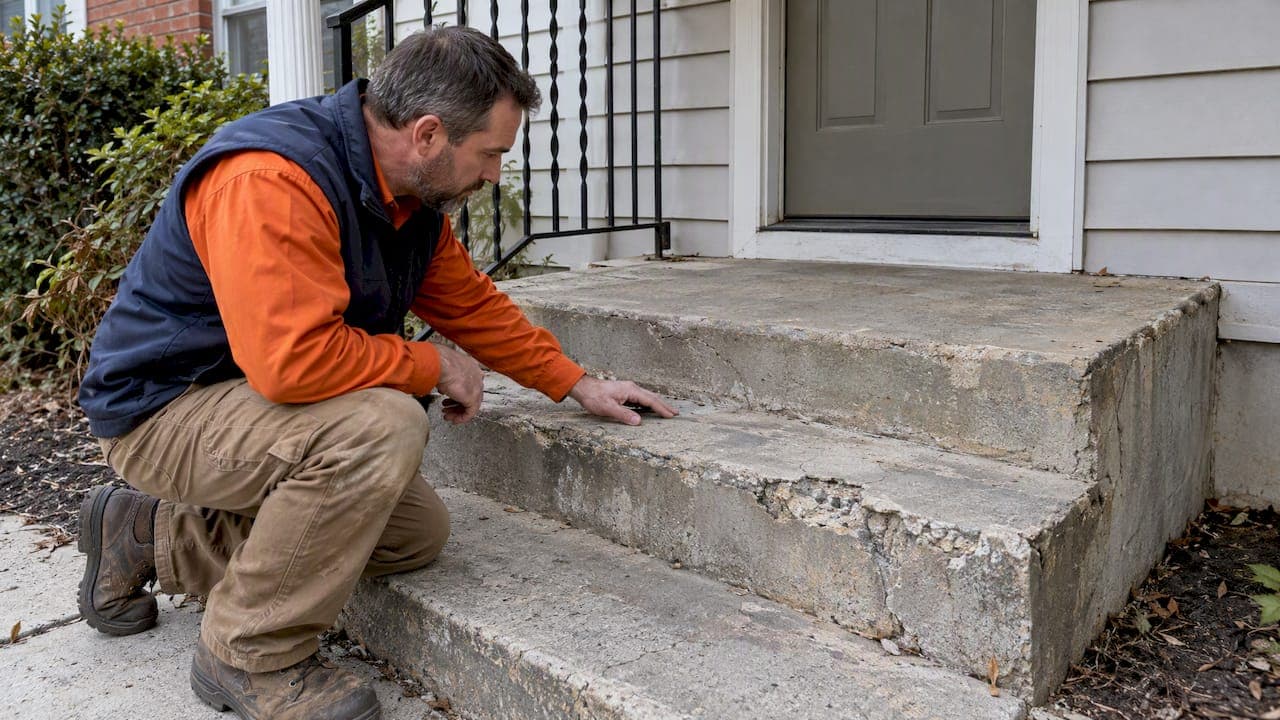
If your porch steps are only chipped or show shallow spalling, you can safely patch or resurface them yourself. If they are sinking, cracked all the way through, or show exposed corroded rebar, hire a licensed contractor for a condition assessment and a likely replacement. When you do call a pro, ask for a written, itemized estimate before any work begins.
TL;DR:
- Small cosmetic repairs can be DIYed if the cracks are superficial, the steps are level, and rebar is not exposed or corroded.
- Repeated patching or overlay failures indicate underlying issues like settlement or active corrosion, which require professional assessment before repair.
- Full replacement is advisable when there are extensive cracks, crumbling edges, ongoing sinking, or corroded reinforcement, especially after patch failure.
- Hiring an experienced contractor is crucial, with emphasis on license, insurance, references, detailed scope, and understanding of underlying structural problems.
- Cost for patching or resurfacing ranges from $300 to $800, while structural repairs and replacement can cost significantly more and take longer depending on scope and weather conditions.
Table of Contents
- How to tell if your porch step damage is cosmetic or structural
- Safe DIY repairs for chips, cracks, and small resurfacing jobs
- Professional repair methods for sinking or badly damaged steps
- What porch step repairs typically cost and how long they take
- When replacement beats another round of repairs
- What to ask a contractor before hiring them for the job
- Why experience with structural repair matters for this job
- A short take on timing and getting it right the first time
- Getting your porch steps fixed the right way
- FAQ
- Sources
How to tell if your porch step damage is cosmetic or structural
A clear-eyed inspection tells you whether you are looking at a weekend project or a job for a licensed contractor. Start by running your hand along each tread and riser, looking for the difference between surface chips, flaking spalling, and cracks that run clean through the concrete.
Check whether the steps are level using a straightedge or a long level laid across each tread. A step that tilts noticeably or has pulled away from the house foundation points to settlement, not a cosmetic problem. Look closely at any exposed metal: rust stains bleeding through the surface or flaking reddish-brown material usually mean the reinforcing steel inside has begun to corrode, which ACI guidance treats as a root cause that must be addressed before any patch is applied, since repairs placed over active corrosion tend to fail again.
Drainage is often the real culprit behind recurring damage. Check for:
- Pooled water sitting on treads after rain instead of running off
- Caulk or sealant that has pulled away from the step-to-house joint
- A downspout discharging directly onto or near the steps
- Visible salt residue, a white powdery deposit called efflorescence, on the surface
Pro Tip: Take dated photos of cracks and gaps every few months. Widening or shifting over time is one of the clearest signs you need a structural evaluation, not another patch.
Safe DIY repairs for chips, cracks, and small resurfacing jobs
Small, cosmetic damage is a reasonable weekend project if you prepare the surface correctly and pick the right material for the job.
- Clear and clean the area. Chip out loose or crumbling concrete with a hammer and cold chisel, then sawcut the perimeter of larger patches so the repair has a clean edge to bond against.
- Wet the surface correctly. Most repair mortars need a saturated surface-dry substrate, meaning the concrete is damp but has no standing water, which the application procedures outlined by ACI identify as essential for a lasting bond.
- Choose the right product. Quikrete’s homeowner guidance recommends vinyl concrete patcher for thin cosmetic layers, quick-setting cement with acrylic fortifier for corners and edges, and polymer-modified repair compounds where freeze-thaw cycling is a concern.
- Anchor chipped corners before filling. Drilling short holes and setting concrete screws or small rebar dowels into the sound concrete gives a corner patch something to grip, which This Old House notes holds up far better under foot traffic than an unanchored trowel patch.
- Finish for slip resistance. A broom or brush finish, or a non-slip additive mixed into the final coat, keeps a freshly patched step from becoming a hazard once it cures.
Pro Tip: Cure your patch under plastic sheeting or damp burlap for several days, and avoid heavy foot traffic until it has fully set. Rushing the cure is the most common reason DIY patches fail early.
Stop and call a professional if you uncover corroded rebar, a crack that runs through the full depth of the tread, or any sign the step has shifted or settled. These point to problems that a cosmetic patch cannot fix.
Professional repair methods for sinking or badly damaged steps
Once the damage goes beyond the surface, the repair method has to match the actual cause rather than just covering it up.
- Mudjacking or polyurethane foam lifting raises a sunken step back to level by injecting material beneath the slab. It is a targeted fix for settlement, not a repair for cracked or crumbling concrete itself.
- Recap or overlay systems pour a new layer, typically a half inch to three-quarters of an inch or more, over the existing step. This works well when the base concrete is structurally sound and the damage is mostly cosmetic, but an overlay poured over an unstable base will crack again.
- Structural repair involves removing damaged concrete down to sound material, replacing corroded reinforcement, and anchoring new rebar or dowels into the existing structure before a new section is poured. ACI’s repair methodology notes that some of these jobs call for a licensed design professional, particularly where the repair affects load-bearing capacity.
- Full replacement means demolishing the old steps entirely, building new forms, pouring fresh concrete, and finishing the surface to match the house. This route usually requires a permit and offers the longest service life of any option.
A contractor who proposes an overlay without first checking for settlement or corrosion underneath is skipping the diagnosis step that makes any of these methods durable.
What porch step repairs typically cost and how long they take
Patching and resurfacing jobs commonly fall in the $300 to $800 range nationally, according to HomeGuide’s cost data, while mudjacking or foam leveling runs higher and full replacement climbs further depending on scope. Labor typically makes up 40 to 60 percent of the total bill, so local labor rates shift the final number as much as the materials do.
A few factors drive price beyond the base repair type: the number of steps involved, whether polymer-modified or epoxy materials are specified for durability, permit fees where replacement is required, disposal of old concrete, and any added cost for freeze-thaw protection in colder climates.
Timeline expectations matter too. A DIY patch might take an afternoon plus several days of curing. A professional recap or structural repair often runs a few days on-site, and full replacement can take a week or more once forming, pouring, curing, and finish work are factored in. Weather delays are common with any concrete work, since both pouring and curing depend on stable temperatures.

When replacement beats another round of repairs
Repeated patching has a breaking point. Consider full replacement when you see crumbling edges across several treads rather than one isolated spot, ongoing sinking that a single mudjacking treatment has not resolved, deep fractures running through the slab, or reinforcing steel that has visibly corroded.
- Repair costs that start approaching a large share of what full replacement would cost
- A patch or overlay that has already failed once in the same spot
- Visible settlement that keeps returning after leveling work
Replacement also gives you the chance to fix the underlying problem for good: improved drainage, better flashing where the steps meet the house, and a finish that matches the rest of the exterior. A new structural repairs project resets the clock on service life instead of extending a problem.
What to ask a contractor before hiring them for the job
A good bid looks nothing like a vague one, and the questions you ask upfront separate the two.
- Confirm license and insurance. Ask to see current documentation, not just a verbal assurance.
- Ask about concrete-specific experience. Porch steps carry foot traffic and weather exposure that differ from a driveway or patio.
- Request before-and-after photos and references from similar jobs, ideally steps rather than flatwork.
- Get a written, itemized scope that names the specific materials, not just “concrete repair.”
- Clarify who pulls the permit if the job requires one, and ask about warranty terms in writing.
Pro Tip: Compare bids by matching scope and material line by line, not just the bottom number. A lower bid that skips sawcutting or anchorage often costs more once the repair fails.
Red flags include a contractor who will not name specific materials, refuses references, pushes for cash only, avoids mentioning permits, or pressures you to sign on the spot. A useful outside resource for vetting is this list of questions to ask a concrete contractor, which covers many of the same basics from a different angle.
Why experience with structural repair matters for this job
Charles “Chuck” Hinkel has worked in the trade for close to 31 years and founded Magnum Home Services in 2013. The company is an Owens Corning Preferred Contractor and holds a 5.0 Google rating from 102 reviews, built on work that spans concrete, structural repairs, and waterproofing under one crew rather than separate subcontractors for each trade. That range matters on a porch step job, where the real fix sometimes sits below the slab, not on top of it.
A short take on timing and getting it right the first time
Address step damage while it is still small. A chip ignored for a season becomes a safety hazard and a bigger bill. The fixes worth paying for solve the cause, not just the crack.
— Charles Hinkel
Getting your porch steps fixed the right way
A contractor handling concrete and structural repairs alongside waterproofing can address drainage problems feeding step damage in the same visit instead of a separate call. Experienced crews working across concrete, structural, and multi-trade projects can manage the job from start to finish.

When you request an estimate, include photos of the damage, the number of steps affected, any symptoms like sinking or cracking, notes on nearby drainage, and whether you think a permit might apply. Visit our concrete services page to get a condition assessment scheduled, or check out our structural repairs page if you suspect the damage goes deeper than the surface.
FAQ
How can I repair concrete porch steps?
Clean and remove loose material, achieve a saturated surface-dry substrate, and apply a patch material suited to the depth and location of the damage. For anything beyond surface chips, such as sinking or exposed reinforcement, a licensed contractor should assess the cause before any repair is applied, per ACI guidance.
What is the best material to use to repair concrete steps?
The right material depends on the repair: vinyl concrete patcher suits thin cosmetic layers, quick-setting cement with acrylic fortifier works well on corners and edges, and polymer-modified compounds hold up better against freeze-thaw cycling, according to Quikrete’s application guidance. Anchoring corner repairs with short dowels or screws also extends their lifespan under foot traffic.
How do I fix worn concrete steps?
Worn but structurally sound steps are usually good candidates for a recap or overlay, a new layer poured over the existing tread once it is cleaned and prepped. If the wear comes with sinking, wide cracks, or shifting, the underlying cause needs to be addressed first rather than resurfaced over.
Can concrete steps be resurfaced?
Yes, resurfacing works well when the base concrete is sound and the damage is cosmetic, using a bonded overlay of a half inch or more. Resurfacing over unresolved settlement or active corrosion typically fails again, so a quick condition check before resurfacing saves money later.
Sources
- Guide to Concrete Repair (ACI preview)
- Field Guide to Concrete Repair Application Procedures (RAP-6)
- How Much Does Concrete Step Repair Cost? (HomeGuide)
- Fixing chipped concrete steps (This Old House)
Recommended
Free, no-pressure inspections across Towson & Baltimore County.
Keep Reading
More from the blog
Free Estimate
Get your free, no-pressure roof estimate
Tell us what's going on and we'll call you within one business hour. Same-week appointments available across Baltimore County.
- BBB A+
- Owens Corning Preferred
- EPA Lead-Safe
- EIFS Certified
- Licensed & Bonded