
Roof Repair
Top Roofing Problems in Maryland Homes: Roof Repair Maryland Tips to Prevent Costly Damage
- BBB A+
- Owens Corning Preferred
- EPA Lead-Safe
- EIFS Certified
- Licensed & Bonded
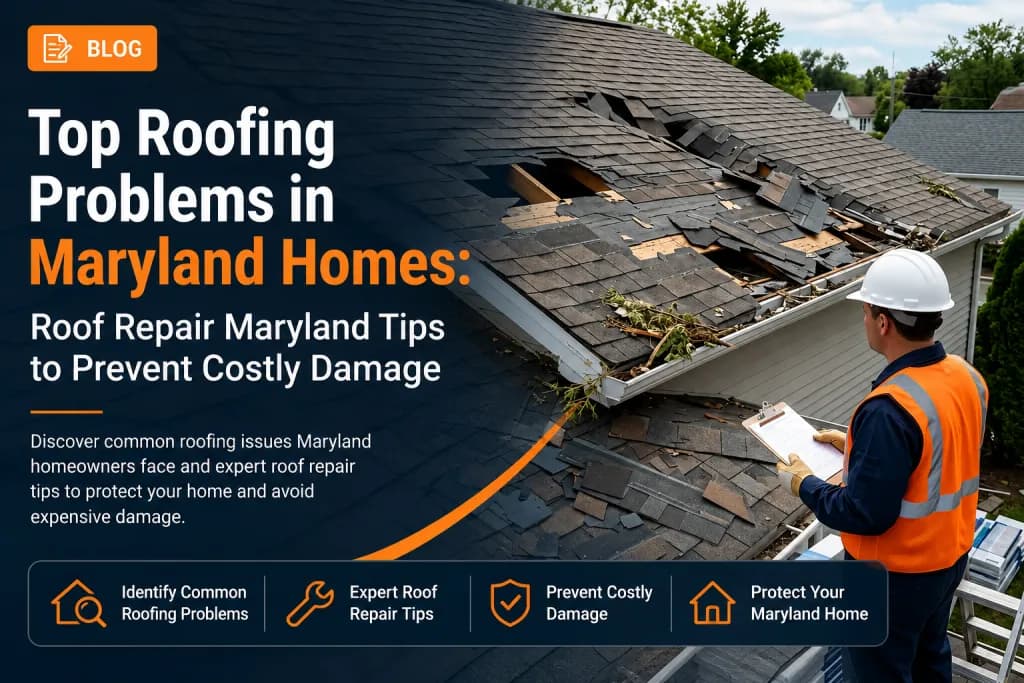
Maryland's climate doesn't just test a roof — it systematically breaks one down. The state averages 43 inches of rainfall annually, Baltimore County regularly sees wind gusts above 50 mph during summer storms, and freeze-thaw cycles repeat 30 or more times each winter. Summer attic temperatures in poorly ventilated homes routinely exceed 150°F.
Because of these changing weather conditions, many homeowners eventually need professional Roof Repair in Maryland to prevent leaks, structural damage, and expensive interior repairs. Trusted Roof Repair Services in Maryland help identify small roofing issues early before they become major problems.
Roofing damage rarely announces itself immediately. A missing shingle or small leak can silently worsen for weeks before interior staining appears. Understanding common roofing problems — and acting early — is how Maryland homeowners avoid costly repairs. Many homeowners delay roof repair services in Maryland until leaks appear indoors, but hidden moisture damage often starts long before visible signs develop.
What Causes the Most Roof Damage in Maryland?
Maryland roofs face constant stress from changing weather throughout the year. Heavy rain, strong wind gusts, summer heat, humidity, and winter freeze-thaw cycles all slowly weaken roofing materials over time. Even small problems like a lifted shingle or cracked flashing can allow water to enter beneath the roof surface, where hidden damage spreads quickly. One of the most common homeowner concerns is, "Why is my roof leaking during heavy rain?" In most cases, damaged flashing, lifted shingles, clogged gutters, or aging roofing materials are the primary causes. Scheduling Roof Repair Services in Maryland early can prevent widespread moisture damage.
The biggest causes of roof damage in Maryland include:
- Wind uplift — strong storms loosen shingles, ridge caps, and flashing, especially around roof edges.
- Heavy rainfall — water enters through small gaps and gradually damages decking, insulation, and ceilings. Many homeowners ask, "Can heavy rain cause roof leaks?" The answer is yes — even minor roof vulnerabilities can allow water intrusion during Maryland's heavy rainstorms.
- Freeze-thaw cycles — trapped moisture expands during freezing temperatures and worsens cracks each winter.
- Extreme attic heat — poor ventilation causes shingles to age faster and lose protective granules.
- Humidity and moss growth — shaded roof areas stay damp longer, leading to moss, algae, and moisture damage.
- Clogged gutters — blocked drainage forces water back under shingles and increases the risk of wood rot and ice dams.
Because these issues build slowly, many Maryland homeowners don't notice damage until leaks or interior stains appear. Regular inspections and early roof repairing services in Maryland homes helps prevent much larger structural problems later.
The 8 Most Common Roofing Problems That Lead to Roof Repair in Maryland Homes
1. Storm and Wind Damage
Maryland averages over 30 severe thunderstorm warnings annually. Winds above 45 mph begin lifting asphalt shingle tabs; gusts above 60 mph — common during derecho events — can strip entire sections. Roof edges, ridge caps, and valleys are the highest-risk points. After any significant storm, inspect from ground level for missing shingles, lifted ridge caps, or exposed dark underlayment. Delaying roofers repairs even a few weeks allows water intrusion to saturate the deck and void manufacturer warranties. Fast storm response from experienced Roof Repair Services in Maryland helps prevent water intrusion, mold growth, and structural deterioration after severe weather events.
2. Damaged or Missing Shingles
Asphalt shingles are designed to last 20–30 years, but Maryland's climate routinely shortens that to 15–20 without maintenance. Deterioration follows a predictable sequence: granule loss first (dark sand-like deposits in gutters), then shingle cupping or curling, then surface cracking and detachment. Once granule coverage drops below a functional threshold, a shingle can go from serviceable to failing within two Maryland summers. Homes in Towson showing widespread granule loss are typically 3–5 years from full replacement — making timely residential roof repair near me both a maintenance and financial planning decision. Many homeowners delay repairs because the damage appears minor, but even a small roof leak can become serious if moisture spreads beneath shingles and into the roof deck.
3. Gutter Failures and Drainage Problems
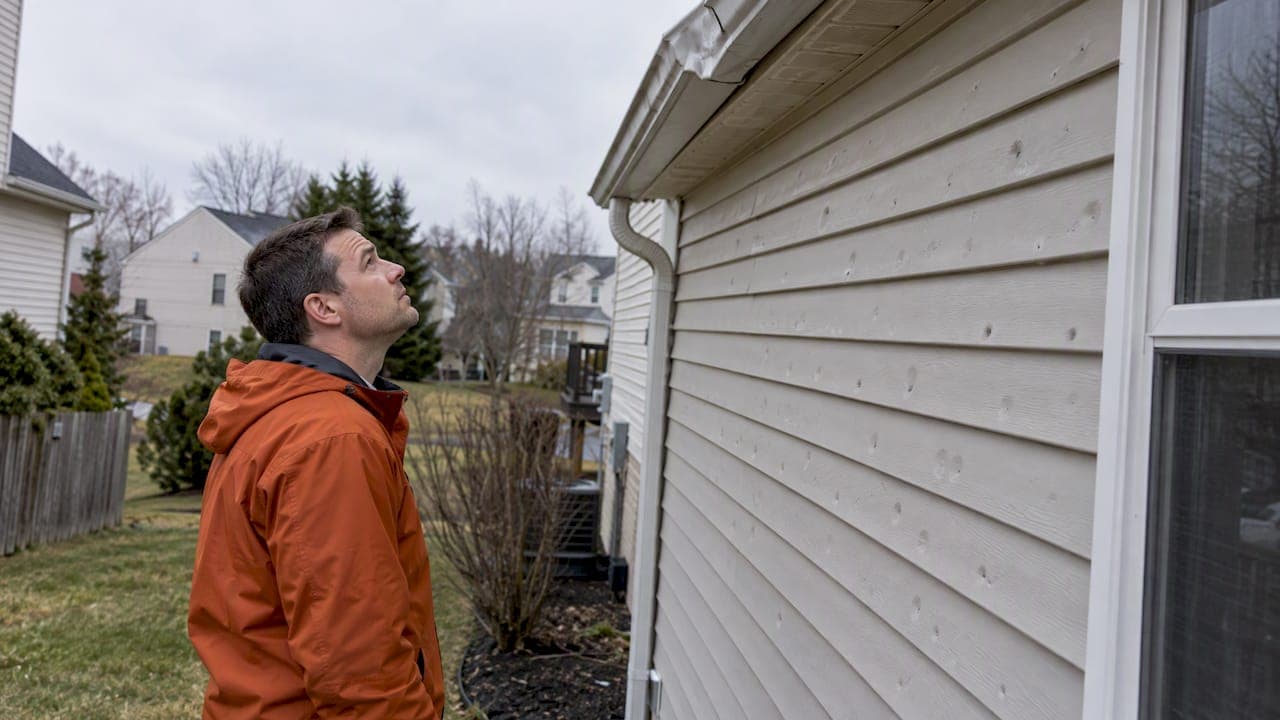
Clogged gutters are an underestimated roofing liability. Standing water adds 8–12 pounds per linear foot to the assembly, pulling brackets from fascia boards. Once the fascia wood rots, the drip edge protecting the roof deck edge loses its support. In winter, those same clogged gutters become a primary ice dam driver — trapped ice forces meltwater beneath shingles at the roof's most vulnerable point. Biannual cleaning is the most cost-effective local roof repair near me prevention step available. Professional Roof Repairing services in Maryland often includes gutter inspections because poor drainage is one of the leading causes of hidden roof leaks and fascia damage.
4. Flashing Failures at Penetrations
Flashing failures cause an estimated 90% of residential roof leak calls. In Maryland homes, the highest-risk points are chimney step flashing, skylight perimeter flashing, and rubber vent pipe boots. Chimney flashing bridges metal and masonry — materials that expand at different rates — and the sealing caulk typically cracks within 5–10 years. Rubber vent boots degrade from UV exposure and crack within 7–10 years. A failed boot is a $75–$150 repair; ignored, it causes thousands of dollars in deck and insulation damage. In many cases, homeowners temporarily patch leaks themselves and ask, "Can I temporarily fix a leaking roof?" Temporary sealants may slow water entry briefly, but professional roof repair is still necessary to prevent long-term structural damage.
5. Moss, Algae, and Lichen Growth
Algae (Gloeocapsa magma) causes the dark streaking common on Maryland rooftops — primarily a cosmetic concern. Moss is a structural one: it holds moisture against shingle surfaces continuously, softening asphalt, loosening granules, and lifting shingle edges as it grows beneath them. Lichen bonds directly to the shingle's mineral surface through root-like rhizines that cannot be removed without damaging the shingle. Zinc or copper ridge strips release trace metals during rainfall that prevent colonization. For existing growth, licensed contractors use low-pressure chemical treatment — pressure washing strips granules and voids warranties.
6. Ice Dams and Freeze-Thaw Damage
Ice dams form when attic heat warms the upper roof above freezing while the overhang stays below it. Snow melt refreezes at the overhang, forcing meltwater beneath shingles and onto the wood deck beneath. Critically, ice dams are a symptom of inadequate attic insulation and air sealing — not just a weather event. Homes with R-38 or higher attic insulation experience significantly fewer ice dams, and removing a dam without fixing the underlying insulation deficiency means the damage will repeat every winter. Roof repair Towson contractors frequently address winter ice dam damage in older Maryland homes with poor attic insulation and ventilation systems.
7. Inadequate Attic Ventilation
A properly ventilated attic should stay within 10–15°F of outdoor air. Poorly ventilated Maryland attics reach 140–160°F in summer — temperatures shingle manufacturers link to a 20–30% reduction in service life. The standard is 1 sq ft of net free vent area per 150 sq ft of attic floor, split equally between soffit intake and ridge exhaust. Many older Towson-area homes lack adequate intake venting, making ridge vents alone ineffective. A ventilation balance assessment should always be included during professional Roof Repair Services in Maryland evaluations to help extend roof lifespan and improve energy efficiency.
8. Structural Damage and Roof Deck Deterioration
Structural roofing problems are the endpoint of ignored moisture intrusion. Water that repeatedly contacts OSB or plywood decking causes wood fibers to swell and soften until fasteners lose their hold; rafters develop progressive rot that compromises load-bearing capacity. A sagging roofline visible from the street typically means deterioration has been developing for 2–5 years — and repair costs escalate sharply because decking replacement and rafter sistering are required before any new roofing can be installed.
Warning Signs Maryland Homeowners Should Never Ignore
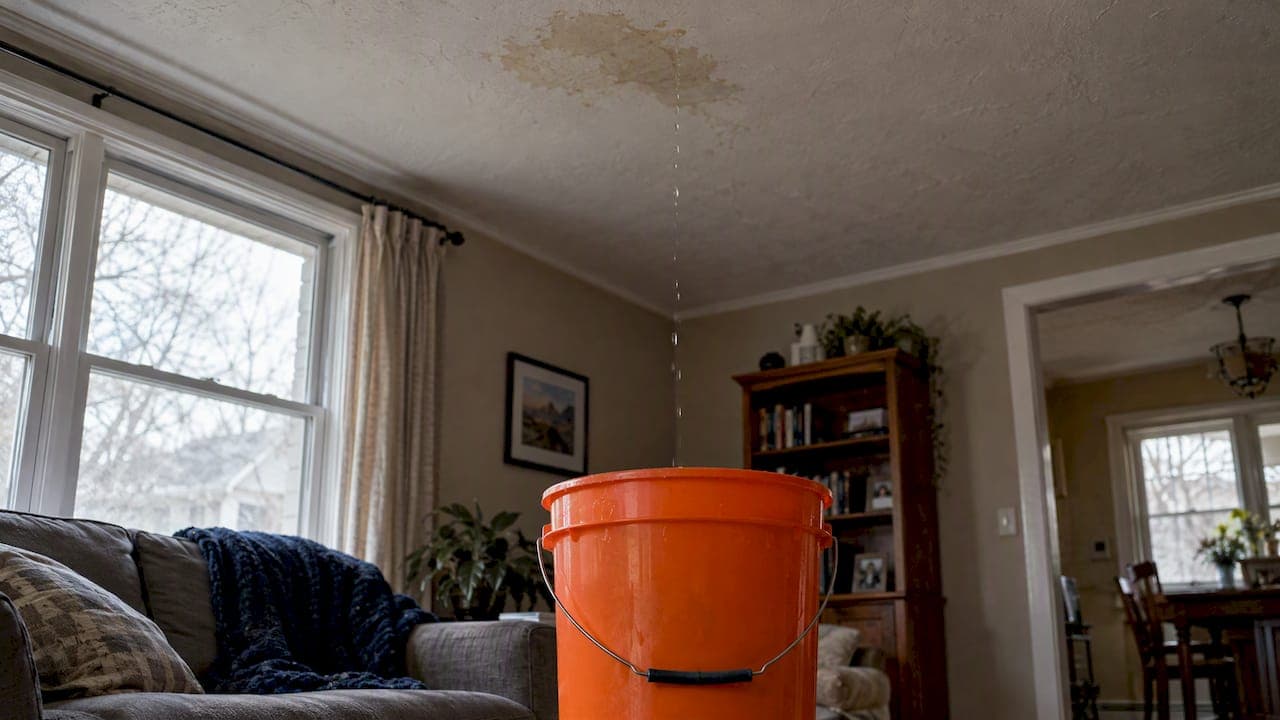
- Ceiling water stains or discoloration after rain — active leak in progress
- Granules collecting in gutters — shingles aging, typically 3–5 years from replacement
- Curling, cupping, or cracked shingles — moisture imbalance or age failure
- Dark streaking across roof surfaces — algae colonization
- Soft or spongy areas on the roof surface — rotted decking beneath
- Sagging roofline or uneven ridge — structural rafter or deck failure
- Musty attic odor — mold from condensation or concealed leak
- Daylight visible through attic boards — gaps in decking or eave junctions
Any single item justifies a professional inspection. Multiple signs together indicate system-wide deterioration. Homeowners who notice these warning signs should schedule Roof Repair in Maryland immediately to avoid expensive structural and interior water damage.
Seasonal Roof Maintenance Checklist for Maryland Homeowners
Spring
Winter often leaves behind hidden roof damage. In spring, homeowners should clean gutters, inspect for missing shingles, check attic spaces for moisture, and schedule a professional roof inspection after heavy snow or ice seasons.
Summer
Maryland summer heat and storms can quickly weaken aging roofs. After strong wind or thunderstorm activity, inspect for lifted shingles, exposed flashing, or debris buildup. Summer is also the best time to improve attic ventilation and trim overhanging tree branches.
Fall
Fall maintenance helps prepare the roof for winter weather. Clean gutters after leaves drop, inspect chimney flashing and vent seals, and address small leaks before freezing temperatures make repairs more difficult.
Winter
During winter, monitor the roof for ice dams, ceiling stains, or attic condensation after snowstorms. Excessive snow buildup and blocked gutters can force water beneath shingles and create costly interior water damage if ignored.
Regular seasonal maintenance helps Maryland homeowners extend roof lifespan, prevent emergency repairs, and reduce long-term roofing costs.
How Fast Should Roof Damage Be Repaired?
Even minor roofing damage should be repaired quickly because roofing systems deteriorate faster once moisture enters beneath shingles. Many Maryland homeowners wait until interior leaks appear before contacting contractors, but hidden roof damage often spreads silently inside attic insulation, decking, and wall structures.
Professional Roof Repair Services in Maryland should ideally be scheduled within days after storm damage, lifted shingles, or flashing failures are discovered. Delaying repairs can increase labor costs, worsen structural damage, and sometimes void roofing material warranties.
For emergency leaks, temporary tarping may reduce immediate water intrusion, but permanent Roof Repair in Maryland should always follow as soon as possible.
How to Choose a Trusted Maryland Roofing Contractor
Any contractor performing roof repair in Maryland should hold an active MHIC license, carry general liability ($1M minimum) and workers' compensation insurance, and provide written itemized estimates. Insist on a written labor warranty of at least 2 years — manufacturer warranties cover materials only, not workmanship. Contractors with local Towson and Baltimore County experience understand regional codes and building practices that generalist operators often don't. For urgent situations, prioritize affordable roofers near me who offer 24-hour emergency tarping — but approach the lowest bid cautiously. Undersized estimates typically mean inferior materials or incomplete scope, producing repeat failures that cost more than the original problem.
Conclusion
Every Maryland roof faces the same relentless forces. The difference between one that reaches 25 years and one that fails at 15 comes down to maintenance discipline and early professional intervention. Homeowners across Towson and central Maryland who schedule annual inspections, maintain clean gutters, and repair small issues promptly consistently avoid the emergency costs that deferred maintenance produces. Roof repair services in Maryland is always most affordable before a problem turns critical.
Free, no-pressure inspections across Towson & Baltimore County.
FAQ
Frequently asked questions
The most common roofing problems in Maryland homes include storm damage, roof leaks, missing shingles, flashing failures, clogged gutters, attic ventilation issues, moss growth, and winter ice dam damage. Many homeowners require Roof Repair in Maryland because these problems worsen quickly during changing seasonal weather.
Yes. Heavy rain can expose weak roofing areas such as damaged shingles, cracked flashing, clogged gutters, or deteriorated sealants. Even small openings can allow water to penetrate beneath roofing materials and create hidden moisture damage inside Maryland homes.
Roof leaks during heavy rain are commonly caused by lifted shingles, aging flashing, poor drainage, clogged gutters, or storm-related roof damage. Professional Roof Repair Services in Maryland can identify the exact source before structural damage worsens.
Yes. Even a small roof leak can eventually damage insulation, drywall, wooden roof decking, and structural framing if ignored. Early Roof Repair in Maryland helps homeowners avoid expensive long-term repairs.
Temporary roof tarps or roofing sealants may reduce water intrusion for a short time, especially during emergencies. However, permanent Roof Repair Services in Maryland are still necessary to fully resolve the underlying problem safely.
Roof damage should be repaired as quickly as possible after discovery. Delaying repairs allows moisture to spread beneath roofing materials, increasing repair costs and the risk of structural deterioration.
Minor roof repairs in Maryland typically cost between $150 and $500, while moderate repairs range from $500 to $2,500. Extensive structural roof repair or decking replacement may cost significantly more depending on damage severity.
Architectural asphalt shingles remain the most popular roofing material in Maryland because they balance durability, affordability, and storm resistance. Metal roofing and synthetic materials also perform well in Maryland's changing climate conditions.
Choose a licensed and insured contractor with experience handling local Maryland weather-related roofing problems. Reliable Roof Repair Services in Maryland should provide written estimates, warranties, local references, and emergency repair support.
Keep Reading
More from the blog
Free Estimate
Get your free, no-pressure roof estimate
Tell us what's going on and we'll call you within one business hour. Same-week appointments available across Baltimore County.
- BBB A+
- Owens Corning Preferred
- EPA Lead-Safe
- EIFS Certified
- Licensed & Bonded